Tiny Treasures, Infinite Stories: How Britain's Button Boxes Are Becoming Our Most Precious Design Archive
The Archaeology of Affection
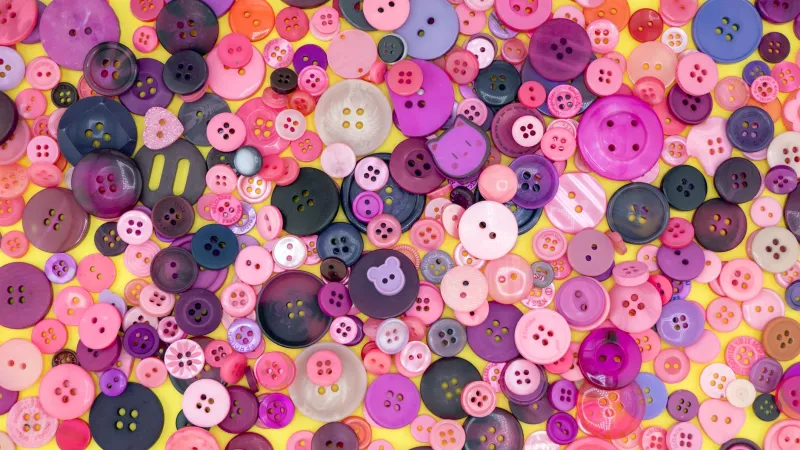
In the back of Margaret Thompson's sewing drawer sits a Quality Street tin that hasn't held chocolate for thirty-seven years. Instead, it houses something far more precious: four generations of button memories. There's the mother-of-pearl set from her own wedding dress, brass buttons from her father's naval uniform, tiny pink ones from her daughter's first school cardigan, and dozens more – each carrying a story, each saved 'just in case'.
Margaret, now 78, recently passed this collection to her granddaughter Emma, a fashion student at Central Saint Martins. "I expected her to roll her eyes," Margaret laughs. "Instead, she spent three hours photographing every single button, asking about their stories."
 Photo: Central Saint Martins, via dico-rk.de
Emma represents a growing movement of young makers, designers, and conscious consumers who are rediscovering these humble household archives as repositories of both material and memory.
The Democracy of Small Things
Unlike grand heirlooms or valuable antiques, button boxes were – and are – profoundly democratic. Almost every British household has had one: a battered tin, an old jam jar, a worn wooden box where buttons were saved from garments too worn to keep but too precious to entirely discard.
"These collections represent the most honest form of British design history," explains Dr. Amy Richardson, a textile historian at the Victoria & Albert Museum. "They're not curated or considered – they're simply what ordinary people thought worth saving from the clothes they actually wore."
 Photo: Victoria & Albert Museum, via d1g9li960vagp7.cloudfront.net
The contents tell stories that fashion museums often miss: the practical beauty of 1950s coat buttons, the optimistic colours of 1980s children's wear, the quiet craftsmanship of buttons that were meant to last decades, not seasons.
Inheritance as Inspiration
For London-based designer Clara Webb, her grandmother's button collection became the foundation of her entire aesthetic. "Every button told me something about who she was," Clara explains, showing off a jacket where vintage mother-of-pearl buttons sit alongside contemporary sustainable fabrics. "The careful way she saved even the smallest ones taught me that everything has value if you look closely enough."
Clara's not alone. Across Britain, makers are incorporating inherited buttons into contemporary designs, creating garments that literally carry forward family history. It's slow fashion in its most poetic form – where the past doesn't just inspire the present, but physically becomes part of it.
The Emotional Weight of Function
What makes these collections particularly moving is their functional nature. Unlike photographs or letters, buttons were saved because they might be needed again. They represent a mindset of mending, of making do, of believing that things – and relationships – are worth preserving.
"When I sew one of my nan's buttons onto a new dress, I'm not just adding decoration," says Birmingham-based seamstress Aisha Patel. "I'm continuing a conversation about value, about what we choose to keep and why."
Aisha runs workshops teaching young people to incorporate inherited buttons into contemporary garments. "The stories that emerge are incredible," she says. "A button from a christening dress, another from a first job interview outfit. These tiny objects hold enormous emotional weight."
Beyond Nostalgia: A Sustainable Future
While the emotional appeal is clear, there's also a practical sustainability argument for rediscovering button boxes. The fashion industry produces billions of new buttons annually, many of which end up in landfill when garments are discarded. Using inherited buttons is a small but meaningful act of circular design.
"It's about breaking the cycle of disposability," explains sustainable fashion advocate James Morrison. "When you use a button that's already lived through several garments, you're making a statement about longevity, about creating clothes that are meant to be treasured rather than discarded."
The Curation of Memory
Some makers are taking the concept further, creating new garments specifically designed to showcase inherited button collections. Manchester-based artist Sarah Chen creates 'button portraits' – jackets and coats where each button tells part of a family's story.
"I had one client bring me buttons from five generations of women," Sarah explains. "We created a coat where the buttons traced the family timeline from Victorian jet buttons through to modern resin ones. When she wears it, she's literally wearing her family history."
Teaching Through Treasures
Perhaps most importantly, these rediscovered button boxes are teaching a new generation about quality, craftsmanship, and the stories objects can hold. In an age of fast fashion and disposable everything, the humble button collection offers lessons in value that go far beyond their monetary worth.
"My students are fascinated by the idea that someone would save buttons for decades," says textile tutor Linda Evans at Glasgow School of Art. "It challenges everything they know about contemporary consumption patterns. These collections represent a completely different relationship with objects – one based on care rather than convenience."
 Photo: Glasgow School of Art, via shared.fastly.steamstatic.com
The Future of Small Things
As more young people inherit these collections, they're finding new ways to honour both the objects and the intentions behind them. Some are creating digital archives, photographing and cataloguing family button collections. Others are using them as starting points for contemporary designs that blend old and new.
What unites them all is a recognition that these tiny treasures represent something profound: the belief that beauty can be found in the smallest details, that nothing valuable should be wasted, and that the act of saving something 'just in case' is actually an act of hope.
In a world increasingly concerned with sustainability and meaning, Britain's button boxes offer both practical solutions and philosophical guidance. They remind us that the most precious design archives might not be in museums or libraries, but in the back of our own drawers, waiting patiently to tell their stories to anyone willing to listen.