Gloriously Undone: A Love Letter to the Flawed, Foxed, and Fabulously Imperfect Vintage Piece
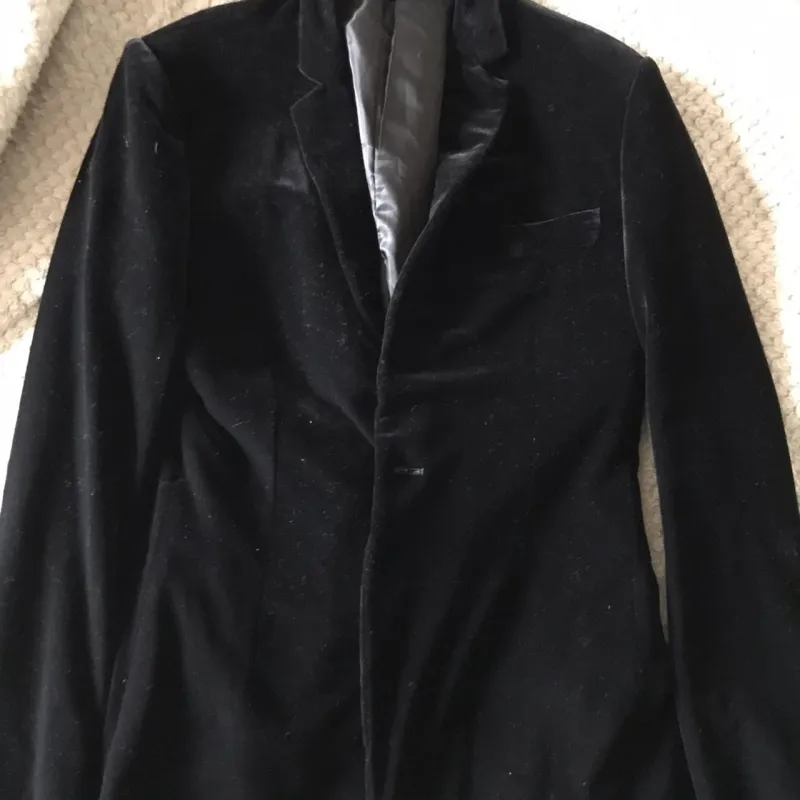
Photo: vintage velvet blazer worn patina imperfect secondhand clothing texture close up, via media-photos.depop.com
Let's talk about the moth hole. Not the catastrophic one — not the garment that's more absence than fabric — but the small, considered-looking one. The one in the left elbow of a 1960s cashmere cardigan, surrounded by a halo of slightly pilled wool, that speaks of decades of real, committed wear. The kind of damage that tells you someone loved this thing before you did.
That moth hole, to a certain kind of vintage buyer, is not a defect. It is, in fact, the point.
Something strange has been happening in the vintage world over the past few years. As secondhand clothing has moved from the province of dedicated charity shop rummagers into the mainstream — onto carefully lit Depop feeds, into curated vintage boutiques charging boutique prices — a particular aesthetic has taken hold. Call it pristine vintage: garments selected, photographed, and sold on the basis of their flawlessness. Labels intact, seams unfrayed, colours unfaded. The past, essentially, without the evidence of having lived in it.
And it's making some of us rather cross.
The Tyranny of the Pristine
The case for perfect vintage is not entirely without logic. If you're paying serious money for a piece, you want it to last. Structural integrity matters. Nobody is arguing for the joyful purchase of a dress that falls apart on first wear.
But there's a difference between sound and spotless — and the conflation of the two has quietly narrowed what we consider desirable. Scroll through the most-followed vintage accounts and you'll find a particular kind of beauty: sharp, clean, almost clinical. The clothes look wonderful. They also look, somehow, as though they've never been worn.
Sarah, who has run a vintage stall at Brighton's Open Market for over a decade, has watched this shift with a mixture of fascination and mild despair. "Customers used to come in looking for character," she says. "Now I get people who'll put something back because there's a tiny mark on the lining that you'd never see when you're wearing it. They've been trained by social media to want perfection. But perfection isn't what vintage is."
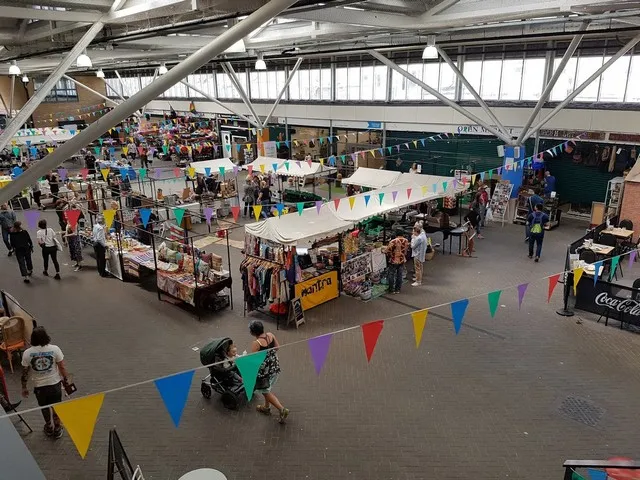 Photo: Brighton's Open Market, via www.urtrips.com
What the Flaws Actually Are
Here is what a slightly faded hem actually is: evidence that someone wore this garment in sunlight. That they walked somewhere, stood somewhere, lived in this thing. The fade is a record of movement and time and a life being lived.
Here is what a foxed silk blouse actually is: a document of humidity and years and careful storage in a box that wasn't quite airtight enough. Those rust-brown spots are the marks of organic material doing what organic material does — changing, slowly, in conversation with its environment.
Here is what a missing button actually is: a repair waiting to happen, an invitation to make the piece more yours than it was before.
Denise, a textile conservator based in Edinburgh, works with historic garments from private collections and small museums. Her professional life is spent in close proximity to fabric that has survived centuries, and she has a particular perspective on what age actually looks like. "The things that people call damage are often just evidence of existence," she says. "When I see a garment with a mended tear or a rewoven section, I find it more interesting, not less. Someone valued it enough to repair it. That's a relationship with an object that I find genuinely moving."
The Velvet Blazer Argument
Consider the 1970s velvet blazer — arguably the apex of the imperfect vintage argument. In its ideal form, this garment arrives with slightly crushed pile at the elbows and cuffs, perhaps a small repair at one pocket, a lining that has taken on the faint impression of the bodies it has held. The colour — bottle green, burgundy, midnight blue — will have deepened and softened unevenly, creating a richness that no new fabric can replicate.
This blazer, in pristine condition, would be a nice jacket. In this condition — worn, marked, slightly glorious — it is something else entirely. It has, as textile artist and vintage devotee Clara puts it, "absorbed the energy of its own history."
Clara, who teaches natural dyeing workshops in the Peak District and builds her own wardrobe almost entirely from imperfect vintage, articulates something that a lot of wearers feel but struggle to name: "When I put on something that has been worn before, I feel like I'm participating in a longer story. The imperfections aren't separate from that — they're the evidence of it."
 Photo: Peak District, via i.pinimg.com
The Politics of Wearing the Imperfect Thing
There's also something quietly political about choosing the flawed piece over the perfect one. It is a refusal of the idea that only the pristine deserves to be seen — that objects (and, by extension, people) must present themselves without visible history in order to be considered beautiful or valuable.
The visible mend, the worn-in patina, the lovingly re-buttoned blouse: these are choices that say something about what you value. Not the performance of newness, but the genuine accumulation of time. Not the fantasy of the past, but the reality of it.
In a fashion landscape still largely built on the idea that newer is better and flawlessness is the goal, wearing something beautifully imperfect is, in its quiet way, a statement.
How to Fall in Love With Imperfect Vintage
If you've been trained to overlook the flawed piece, here's a suggested reframe: when you pick something up, ask not whether it's perfect, but whether it's interesting. Look at the marks and ask what made them. Hold the fabric up to the light and examine where it has thinned and softened with wear.
Learn basic repair — a missing button is genuinely not a crisis, and a small darned hole can be its own kind of decoration. Embrace the foxed silk blouse. Adopt the moth-kissed cashmere. Give the crushed velvet blazer a home.
The most compelling wardrobes are not the most immaculate ones. They are the ones that tell the most interesting stories — and the best stories always have a few rough edges.