Ink, Intention & Identity: Why Britain's Letter-Writers Are Quietly Revolutionising How We Get Dressed
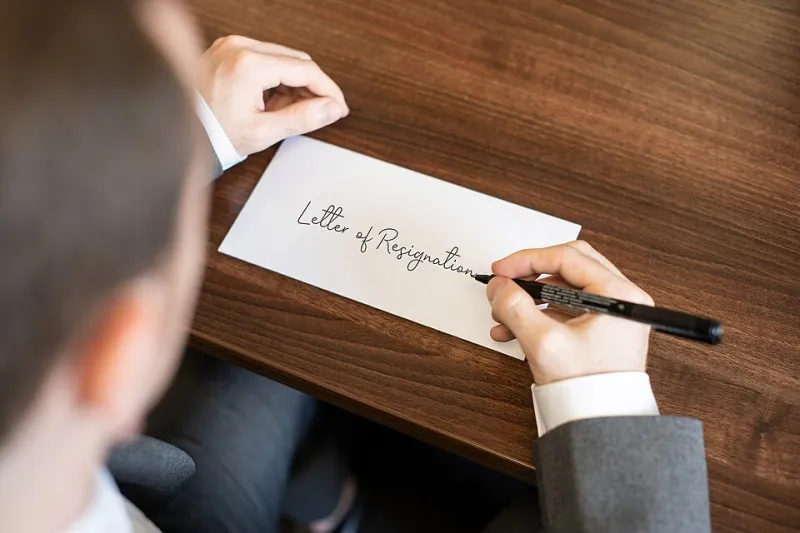
Photo: CIPHR Connect, CC BY 2.0, via Wikimedia Commons
Ink, Intention & Identity: Why Britain's Letter-Writers Are Quietly Revolutionising How We Get Dressed
Somewhere in Bristol, a woman called Margot is sitting at her kitchen table at seven in the morning, a glass dip pen in her hand, a sheet of handmade cotton paper in front of her, and a small pot of walnut ink she pressed herself from foraged husks last October. She is writing a letter. Not an email drafted to sound like a letter. An actual letter, in an envelope she decorated herself with pressed ferns and a wax seal bearing a crescent moon.
Margot is not unusual. Not anymore.
Across Britain, something quiet and rather beautiful is happening. The handwritten letter — that most personal of technologies, the one we were all so certain had been permanently displaced by the notification and the DM — is coming back. Not as nostalgia performance, not as quirky affectation, but as a genuine cultural statement. And the people driving this revival are, perhaps unsurprisingly, the same people rethinking how they dress.
The Philosophy of the Slow Mark
To understand why letter-writing and fashion are converging, you have to understand what both have in common: they are both, at their most meaningful, acts of self-definition made visible.
When you choose a fountain pen, you're committing to a particular experience of time. You cannot rush a fountain pen. You cannot dash off a letter in the way you dash off a text. The pen demands that you slow down, that you choose your words, that you form each letter with some degree of care. The result — a page covered in your own particular handwriting, with its idiosyncrasies and its pressure variations and its occasional blot — is irreducibly yours. It cannot be copied. It cannot be templated. It is a mark of the self.
Isn't this exactly what the most interesting dressing does?
Elspeth Cairns runs Inkwell & Ivy, an independent stationery studio in Edinburgh that makes handmade paper and botanical inks. She's been watching the crossover between her customers' stationery habits and their wardrobes for years. "The people who come to me for letter-writing supplies are almost never people who shop at fast fashion retailers," she says. "They're people who buy secondhand, who make things, who care about provenance. The mentality is identical — they want the things they use and wear to mean something beyond their function."
Wax Seals & Statement Dressing: The Decorative Impulse
One of the most interesting things about the letter-writing revival is its embrace of decoration for decoration's sake. Wax seals. Elaborate addressing in copperplate. Envelopes lined with vintage map pages or hand-marbled paper. The whole practice is shot through with a delight in ornament that refuses to justify itself in utilitarian terms. The seal doesn't make the letter more legible. The hand-lettered address doesn't make it arrive faster. These details exist purely because they're beautiful, because they communicate care, because they transform a functional object into a small work of art.
This is, word for word, the argument that slow-fashion advocates make about clothing. A hand-stitched buttonhole doesn't make a coat warmer. A carefully chosen lining fabric doesn't make a jacket more durable. But both transform the garment from a transaction into an expression.
London-based slow-fashion designer Anouk Verhaegen, who makes small-batch printed silk pieces from her Peckham studio, has been thinking about this connection explicitly. "I started writing letters seriously about three years ago," she says. "And I noticed that the way I thought about designing a letter — what paper, what ink, what seal, how does the whole thing feel when someone holds it — was exactly the way I think about designing a garment. What fabric, what weight, what lining. How does it feel when someone puts it on."
Her current collection, she says, was directly influenced by a collection of Victorian letters she found at a car boot sale in Kent. "The handwriting was extraordinary. The ink had faded to this beautiful warm brown. The paper had this incredible texture. I just kept thinking: I want to make a blouse that feels like this letter looks."
The Community Where Ink Meets Thread
The overlap between stationery culture and slow fashion isn't just theoretical — it's forming actual communities. Online, Instagram accounts dedicated to 'penmanship' and 'snail mail' have significant crossover audiences with those celebrating slow fashion, independent making, and textile arts. In person, craft markets and independent bookshops are increasingly hosting events that bring both communities together.
The Correspondence Club, a loose collective of letter-writers based in Manchester, holds monthly meetings that have evolved into something much broader. "We started as just a group of people who wanted to write letters," says founding member Harriet Yuen. "But the conversations always ended up being about making things, about intentionality, about how we present ourselves to the world. Half our members are also involved in textile arts or slow fashion in some way. It makes complete sense — we're all interested in the same question, which is: how do you make something that genuinely carries a piece of yourself?"
Botanical Ink & Botanical Dye: The Same Sentence
There's a particularly beautiful convergence happening between the botanical ink movement — makers pressing pigment from foraged plants, berries, and bark — and the natural dye revival in British textiles. The processes are, in many cases, nearly identical. The walnut ink Margot makes in Bristol uses the same tannin-rich husks that a natural dyer would use to mordant fabric. The woad that makes a striking blue ink on paper is the same plant that gives indigo-dyed linen its depth.
Several makers have noticed this and started working across both disciplines. Somerset-based maker Ros Pemberton runs workshops teaching botanical ink-making and natural textile dyeing as a single practice. "I think of them as the same conversation," she says. "You're asking the same questions: what does this plant have to give? How do you coax colour from something living? How do you fix it, preserve it, make it last?"
The resulting objects — whether a bottle of copper-green oak gall ink or a naturally dyed linen shirt — share a quality that's difficult to name but instantly recognisable. They look alive. They carry the specificity of the place and season in which they were made. They are, in the fullest sense, handmade.
Getting Dressed as an Act of Authorship
The deeper argument being made by Britain's letter-writing revival — whether its proponents articulate it this way or not — is that personal expression is worth the effort. That the time spent choosing the right paper, the right pen, the right words, is not wasted time but meaningfully spent time. That the recipient of a handwritten letter receives something qualitatively different from the recipient of an email, and that the difference matters.
Applied to dressing, this becomes: the person who chooses their outfit with genuine attention — who considers texture, who thinks about colour relationships, who perhaps makes or mends something themselves — is engaging in an act of authorship rather than consumption. They are, in the most literal sense, writing themselves into the world.
Margot finishes her letter, folds it carefully, and slides it into its hand-addressed envelope. She presses the wax seal — the crescent moon, warm and slightly imperfect — and sets it aside to cool. Then she goes to get dressed for the day, pulling on a Liberty-print blouse she found in a Totnes charity shop and a skirt she altered herself. The whole process, letter and outfit together, has taken her an hour.
She doesn't consider this a luxury. She considers it the point.