Sugar, Spice & Everything Slice: How the British Tea Table Is Rewriting the Rules of Pattern and Colour
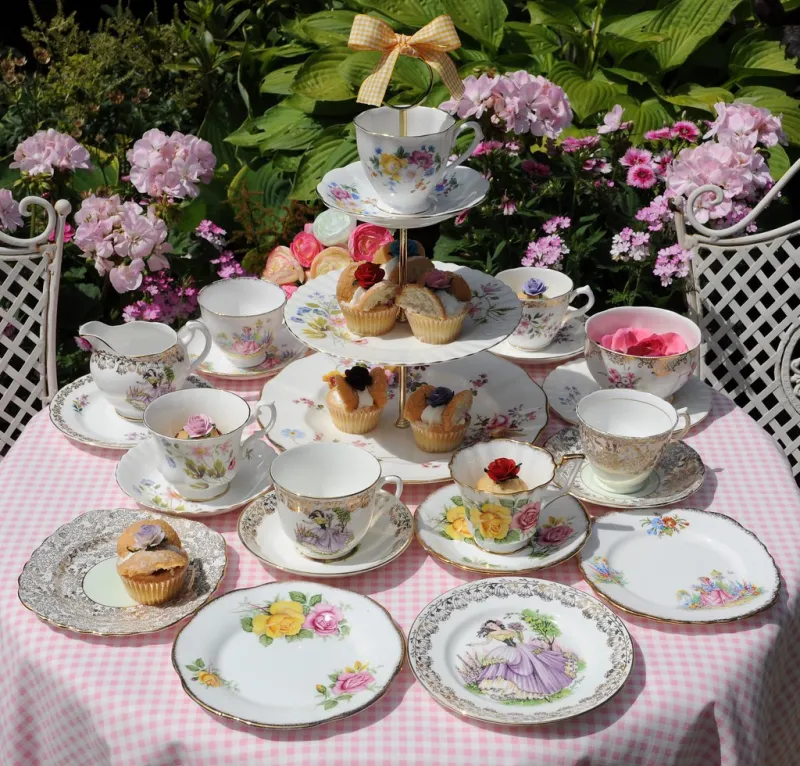
Photo: vintage mismatched china afternoon tea pastel cakes floral pattern, via live.staticflickr.com
There's a particular kind of magic that happens around a properly laid afternoon tea. The mismatched china, each cup a different decade. The tiers of a cake stand holding their cargo of fondant fancies and finger sandwiches like a small, edible architecture. The whole spread existing in a colour world of dusty rose, butter yellow, sage, and cream — a palette so considered, so quietly harmonious, that it could have been drawn up by a textile designer in a very good mood.
As it turns out, it basically has been.
Across Britain right now, a genuinely exciting crossover is happening between cake culture and creative fashion. The resurgent obsession with afternoon tea — not the sad, shrink-wrapped hotel version, but the handmade, heirloom-china, sugar-flower-topped ritual that independent tea rooms and home bakers have been quietly perfecting — is feeding directly into the visual language of a new generation of makers. Ceramicists, textile designers, milliners, and accessory artists are all arriving at the tea table for inspiration, and what they're carrying away is transforming what British dressing looks like.
The Geometry of the Battenberg
Ask almost any pattern-focused textile designer working in Britain today what their desert island reference image would be, and a surprising number will mention the battenberg cake. That pink-and-yellow checkerboard cross-section, held together by a thin coat of marzipan, is essentially a perfect geometry lesson wrapped in sponge.
Leicester-based surface designer Priya Hendricks has been working with what she calls 'confectionery grids' for two years. "The battenberg gave me permission to be bold with geometric colour blocking in a way that didn't feel cold or industrial," she says. "Because it's rooted in something so warm and nostalgic — your nan's kitchen, a Sunday afternoon — the geometry carries emotional weight. It's structured but it's also a hug."
Her current collection of printed cotton scarves takes that checkerboard logic and stretches it: alternating dusty blush with pale gold, or sage with ivory, in proportions that shift and breathe across the fabric. Worn loosely over a plain dress or knotted at the neck, they carry the unmistakable warmth of the tea table into everyday dressing without being remotely costume-y.
Mismatched China as a Style Philosophy
One of the most interesting things about afternoon tea culture isn't the food — it's the china. The very particular British tradition of assembling a tea service from completely different sources, different eras, different patterns, and making it work through some instinctive visual alchemy is, when you think about it, exactly how the most interesting dressers operate.
Suffolk ceramicist Nell Farrow has been making hand-thrown mugs and side plates decorated with overlapping floral motifs since 2019, and she's noticed something shift in why people are buying her work. "People used to apologise for their mismatched collections," she says. "Now they're curating them. They'll buy one of my pieces specifically because it doesn't match anything else they own, because the slight tension between patterns is the whole point."
This philosophy — call it 'intentional mismatch' — has migrated wholesale into the wardrobes of her customers. The same woman who builds a tea service from a 1950s Colclough cup, a hand-thrown Farrow mug, and a charity-shop Royal Albert plate is the same woman layering a Liberty floral blouse under a windowpane-check blazer. The logic is identical. The eye that knows how to make disparate patterns sing together at the tea table is the same eye that makes an outfit extraordinary.
Victoria Sponge as Colour Palette
There is a very specific palette inside a Victoria sponge. The golden exterior. The soft cream interior. The deep, jewel-red of the jam. The dusting of icing sugar that sits on top like the very idea of snow. Taken together, these are not colours you'd find in any current Pantone forecast — and yet they feel completely, urgently right.
Manchester-based knitwear designer Sorrel Oakes has been working with what she calls 'bake colours' for her past three collections. "I started keeping a folder on my phone of cake cross-sections," she admits, laughing. "Lemon drizzle, coffee and walnut, carrot cake with cream cheese frosting. The colour relationships inside those cakes are extraordinary — they're always warm, always generous, always slightly unexpected."
Her resulting sweaters — sold through her own studio and a handful of independent boutiques — are layered in exactly that spirit. A rust-and-cream fair isle. A blush mohair with a jam-red stripe. A warm oatmeal cardigan with sage green details. They feel simultaneously nostalgic and completely contemporary, which is perhaps the truest thing you can say about the afternoon tea aesthetic itself.
Sugar Flowers & Decorative Excess
Then there's the matter of excess. The elaborate sugar flowers piped onto celebration cakes. The crystallised violets pressed into buttercream. The tiny fondant butterflies, the gilded edges, the sheer decorative ambition of a properly made afternoon tea spread. In a fashion culture that has sometimes been suspicious of ornament, this kind of joyful elaboration feels almost radical.
Milliner and accessories maker Bea Thorne, based in Bath, has been leaning into exactly this excess for her hand-crafted headpieces. "I kept coming back to the sugar flowers," she says. "The way they're technically precise but also completely dreamlike — they look like real flowers but they're also clearly not. There's this wonderful tension between the crafted and the fantastical."
Her latest pieces incorporate fabric blooms in fondant-adjacent colours: pale mauve, soft coral, creamy white. They sit on hairbands and wide-brim hats like the world's most wearable petit fours, and they've found devoted fans among the same community of women who take their afternoon tea seriously.
The Slowness of the Tea Table
Perhaps what really connects cake culture and contemporary British fashion is something less visible than pattern or colour. It's pace. Afternoon tea is, almost by definition, unhurried. You don't gulp a scone. You don't rush the second pot. The ritual demands that you slow down, pay attention, appreciate the small and the beautiful.
This is the same energy driving the slow-fashion movement, the same impulse that makes someone spend three hours hand-stitching a collar or choosing a fabric with genuine care. The tea table and the thoughtful wardrobe are both, at their core, acts of resistance against the disposable and the hurried.
And maybe that's the most gorjuss thing about this whole delicious crossover: in a world that wants everything fast and forgettable, the cake stand and the beautifully considered outfit are both quietly, sweetly insisting that some things are worth taking your time over.
Pass the Earl Grey. We're not done yet.