Same Outfit, Different Story: The Radical Freedom of the Self-Imposed Uniform

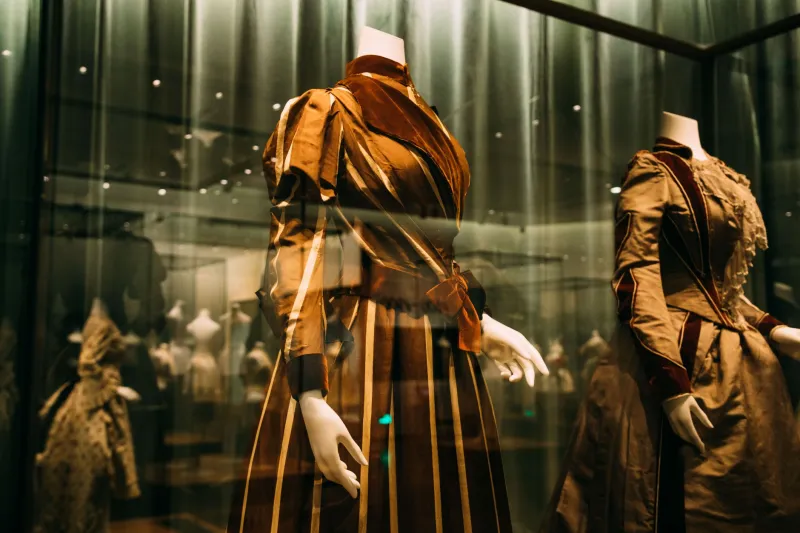
Photo: Dietmar Rabich, CC BY-SA 4.0, via Wikimedia Commons
Let's start with a provocation: what if the most interesting thing you could do with your wardrobe was to stop changing it?
Not out of laziness. Not out of lack of imagination. But deliberately, thoughtfully, as an act of creative will — choosing one look, refining it to near-perfection, and then simply wearing it. Every day. For years.
It sounds like the premise of a minimalist lifestyle blog from 2015. It is, in practice, something far stranger and more interesting than that.
The Uniform as Manifesto
The personal uniform has a long and rather distinguished history. Artists and designers — from Frida Kahlo to Karl Lagerfeld, from Vivienne Westwood in her early punk years to the late, wonderful Isabella Blow — have used the self-imposed uniform not as a retreat from self-expression but as its sharpest possible form. When you wear the same thing every day, that thing becomes iconic. It becomes inseparable from who you are. It stops being an outfit and starts being a statement.
In Britain right now, a quietly growing number of creative people are arriving at this conclusion independently — and their reasons are as varied and fascinating as the uniforms themselves.
There's Dan, 38, a ceramicist from Stoke-on-Trent, who has worn a variation of the same outfit for nearly six years: heavy-duty work trousers, a plain white shirt, a particular style of Japanese selvedge denim jacket, and boots. Always boots. "People think it's because I can't be bothered," he says, with some amusement. "But actually it took me about two years to get it right. I tried dozens of versions. The one I wear now is the result of a lot of thinking."
And Naomi, 31, a poet and performance artist from Birmingham, who wears exclusively black — but black in extraordinary textures, layers, and proportions that shift the silhouette almost daily. "People say I always look the same. I never look the same. The constraint is the point."
Why Limitation Unlocks Creativity
This is the paradox at the heart of the personal uniform: that restriction, applied intelligently, produces freedom rather than stifling it.
Creatives across disciplines understand this instinctively. The sonnet's fourteen lines don't limit the poet — they concentrate the poem. The three-chord structure doesn't constrain the punk song — it focuses it. And the self-imposed uniform doesn't diminish the dresser; it clarifies them.
When you've removed the daily negotiation of what to wear, something opens up. Decision fatigue evaporates. The morning becomes simpler, calmer, more spacious. And the energy that would have gone into choosing — the scrolling, the comparing, the mild existential anxiety of the overstuffed wardrobe — goes somewhere more interesting instead.
"I used to spend a genuinely embarrassing amount of time thinking about clothes," admits Naomi. "Now I think about my work. It's not that I stopped caring about how I look. I just resolved it, and moved on."
This is, incidentally, a deeply feminist position — though it rarely gets framed that way. The personal uniform refuses the cultural pressure on women in particular to be perpetually novel, perpetually interesting in their appearance, perpetually performing a fresh version of themselves for public consumption. Wearing the same thing every day is, in its quiet way, a refusal.
The Uniform as Identity, Not Costume
There's an important distinction between a uniform and a costume. A costume is worn for an occasion. A uniform is worn as yourself. And the personal uniform, at its best, becomes so thoroughly identified with its wearer that the two become inseparable — the person and the look fused into something coherent and unmistakable.
Think about the people in your own life whose look you'd recognise in a silhouette. The friend who always wears wide-leg trousers and a tucked-in shirt. The colleague whose signature is a particular style of headscarf. The neighbour you've never seen without their ancient waxed jacket. These people are, in a sense, more visually present than anyone else — more defined, more themselves.
"I think there's something really honest about it," says Dan. "I'm not trying to be different things to different people. What you see is actually what you get."
In a world of personal branding and curated online selves, this kind of radical consistency has an almost old-fashioned integrity to it. It says: this is me. I've worked out who I am. I'm not performing.
The Craft of Getting It Right
What the personal uniform absolutely isn't, despite appearances, is easy. The people who wear them well have typically spent considerable time — and, often, considerable money — getting the details exactly right. The fit of the trousers. The precise weight of the fabric. The collar that sits just so. The boots that will last a decade.
This is where the uniform intersects with the Gorjuss philosophy most beautifully: because it demands quality, demands craft, demands the kind of slow, careful choosing that fast fashion makes almost impossible. You can't build a personal uniform from things you bought in a panic and never quite loved. It requires the opposite — deep attention, real commitment, a willingness to wait for the right thing.
"I own very little," says Naomi. "But everything I own is perfect."
That word — perfect — comes up a lot in these conversations. Not perfect in the sense of flawless, but perfect in the sense of right. Complete. Arrived at.
And there's something quietly thrilling about that. In a world that profits enormously from your perpetual dissatisfaction with what you own, the person who has found their perfect thing and simply wears it is, in the most understated possible way, an absolute rebel.