Ghost Weather Dressing: The Frost-Touched Textile Movement Haunting Britain's Most Exciting Studios
Ghost Weather Dressing: The Frost-Touched Textile Movement Haunting Britain's Most Exciting Studios
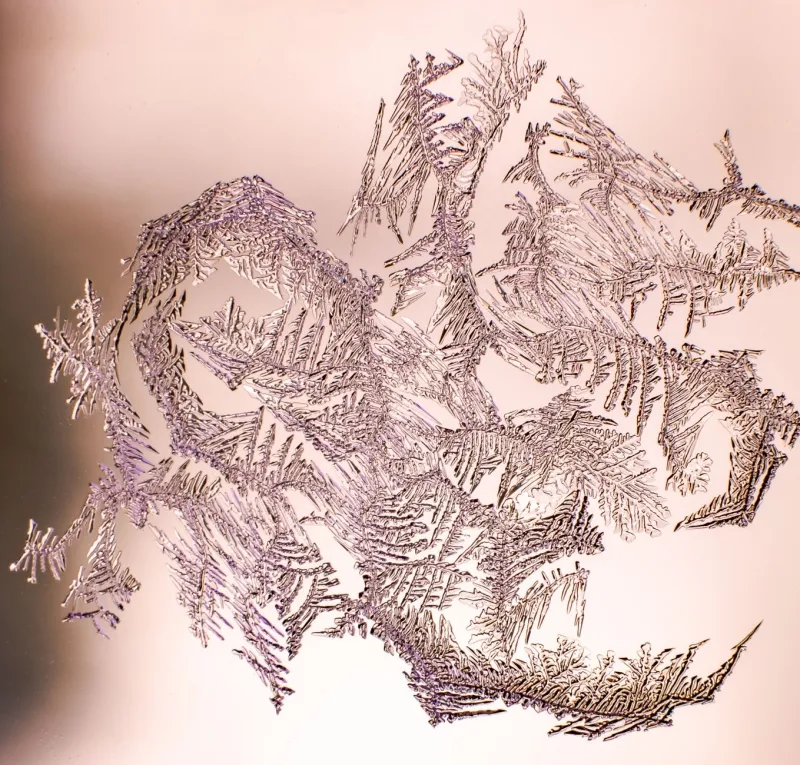
There's a particular kind of British morning that arrives without fanfare. The canal path disappears into white. Frost has drawn its own quiet cartography across every leaf and window ledge overnight. And somewhere in a studio that smells of cold air and strong tea, a textile artist is pressing a sheet of paper against a windowpane and whispering, yes, that's it.
This is the season's most quietly radical trend — and it isn't coming from a Paris runway or a mood board assembled in a glass-walled Shoreditch agency. It's emerging from the margins of winter itself, from the fleeting, unrepeatable patterns that cold air leaves behind before the sun burns them away.
Reading the Weather Like a Sketchbook
For Miriam Osei, a surface pattern designer based in Leeds, the whole thing started with a broken radiator. Forced to work in a studio that never quite warmed up through December, she found herself obsessively documenting the condensation patterns forming on her single-glazed windows each morning. "They were different every day," she says. "Like the glass was dreaming."
Those photographs became the foundation of a small-batch fabric collection — twelve metres of hand-screen-printed cotton voile, each piece carrying a ghostly, branching motif lifted directly from the moisture maps she'd catalogued. The collection sold out within a fortnight, mostly to dressmakers and independent designers who recognised something genuinely new in the aesthetic.
Miriam isn't alone. Across Britain, a loose community of textile practitioners is turning winter's atmospheric phenomena into source material with an almost scientific dedication. Frost crystals photographed at dawn in Derbyshire. Fog banks drifting across the Somerset Levels. The particular way ice forms in overlapping geometric fans on a puddle in a Glasgow back lane. All of it is being translated, reinterpreted, and ultimately worn.
The Science of Ethereal
What makes this trend distinct from previous nature-inspired movements in British fashion is its obsession with process rather than simply image. These makers aren't just printing pictures of frost onto fabric. They're using the actual mechanics of cold — cyanotype printing left outside on freezing mornings, resist-dyeing techniques that exploit temperature differentials, ice-discharge methods where frozen dye solutions are pressed directly onto cloth — to let winter participate in the making.
Sophie Crane, who runs a small dye studio from a converted stable in rural Shropshire, has been developing what she calls her "frost resist" technique for the past two winters. She stretches dampened silk across wooden frames and leaves them outside overnight, allowing ice crystals to form naturally across the surface. The next morning, she works dye into the fabric around the frozen patterns before the thaw arrives. "You get maybe twenty minutes," she explains. "The frost is your collaborator and your deadline."
The results are genuinely breathtaking — pale silks carrying branching white structures that look like something between coral and lightning, each piece entirely unique because no two frosts are identical.
Where Fog Meets the Fashion Curious
The trend is beginning to filter upward into small-batch ready-to-wear, which is where things get interesting for anyone who loves beautiful clothes but doesn't necessarily have a dye studio in their garden.
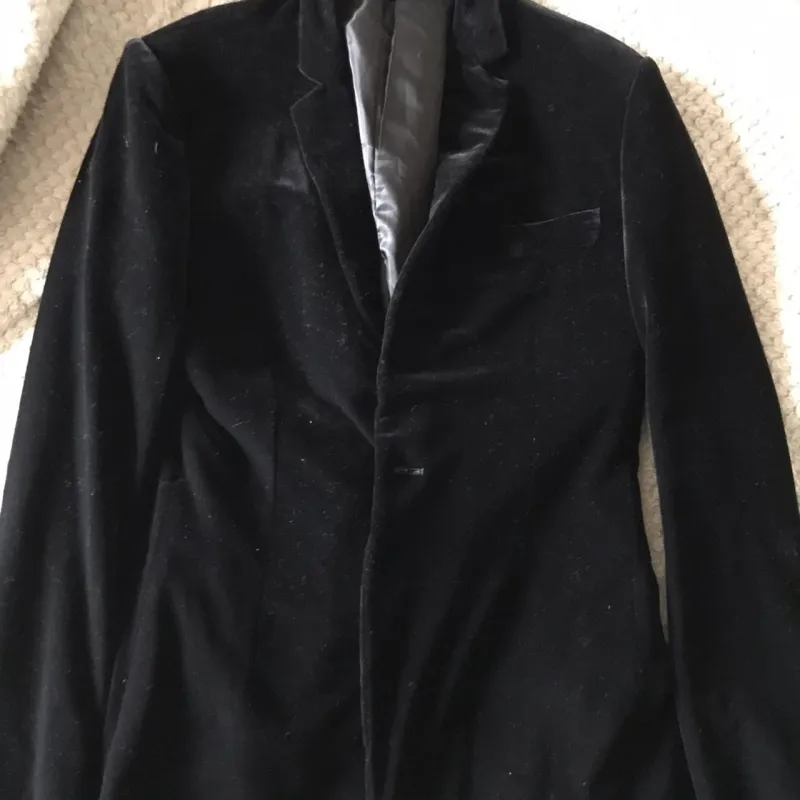
Several independent British fashion labels have started commissioning these textile artists directly, building collections around fabrics that carry the visual logic of winter atmosphere. Think floaty midi dresses in fog-grey silk charmeuse printed with delicate crystalline structures. Oversized shirts in cotton lawn bearing the ghostly imprint of condensation rings. Velvet accessories — headbands, bags, wide belts — embossed with frost-crystal textures that catch the light differently depending on the angle.
The colour palette is notably restrained: ice white, pewter, the particular blue-grey of a canal at seven in the morning, the faint blush that appears on frost just before it melts. Occasionally a deeper tone arrives — the dark green of frosted ivy, the bruised purple of a winter sky — but the overall effect is consistently luminous and hushed.
Building a Frost-Touched Wardrobe
You don't need to commission bespoke textiles to participate in this aesthetic, though if you can find your way to a maker's market or an independent studio open day this winter, it's absolutely worth it. The visual language of this trend translates beautifully into more accessible wardrobe choices.
Start with texture. Fabrics that carry their own internal pattern — jacquard weaves, devore velvet, crinkled silk georgette — echo the complex surfaces that frost and condensation create. A heavily textured cream knit reads as deeply frost-inspired without being literal about it.
Layer with intention. The way fog works in a landscape — depth upon depth, each layer slightly different in tone — is a useful mental model for building outfits. Sheer over opaque. Pale grey over white. A translucent organza blouse worn over a silk camisole in a slightly different shade of the same cool tone.
Accessorise with ice. Jewellery that looks crystalline — raw quartz, faceted glass beads, oxidised silver with a frosted finish — anchors the whole aesthetic beautifully. And if you can find a piece made by one of the growing number of British jewellers working with resin frost textures, so much the better.
The Fleeting Is the Point
Perhaps the most genuinely radical thing about this movement is what it says about value and time. In a fashion landscape that still largely operates on the principle of permanence and repeatability, these makers are building their entire practice around impermanence. The frost will melt. The condensation will dry. The fabric that results carries a record of something that no longer exists.
There's something very Gorjuss about that, actually — the idea that the most beautiful things are the ones that ask you to pay attention right now, before the morning warms up and the magic evaporates. Wear the winter. Wear the weather. Wear the twenty minutes between frozen and thawed when the light is doing something extraordinary and the world looks like it was made from glass.
Because it was, briefly. And someone was watching.