Needles & Neighbourhoods: Inside Britain's Radical Renaissance of Communal Crafting
The Revolution Will Be Hand-Stitched
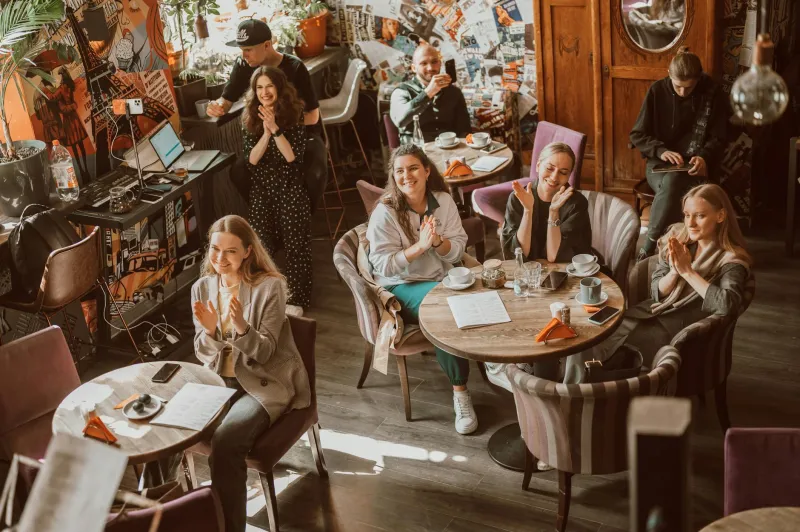
In a converted church hall in Hackney, something magical happens every Tuesday evening. Around a collection of mismatched tables, strangers become friends over the gentle rhythm of needles and thread. Welcome to 'Stitch & Story', one of dozens of mending circles sprouting across Britain like wildflowers through concrete cracks.
"I came here to fix a jumper with a hole in the elbow," says David Chen, 34, carefully darning a geometric pattern across the worn wool. "Three months later, I've learned visible mending, made genuine friends, and discovered that slowing down doesn't have to mean stopping."
This isn't your grandmother's sewing circle – though grandmothers are certainly welcome. These new communal crafting spaces are drawing everyone from burned-out bankers to isolated students, from new parents seeking adult conversation to retirees sharing decades of wisdom. The common thread? A hunger for connection in an increasingly disconnected world.
More Than Mending
The mending café movement began in Amsterdam over a decade ago, but Britain has embraced it with characteristic enthusiasm, adding distinctly local flavours. In Glasgow, 'The Wee Repair Café' operates from a community centre where participants fix everything from clothes to toasters while sharing stories and shortbread. Edinburgh's 'Darning & Drama' combines textile repair with informal book clubs, while Manchester's 'Make Do & Mend Monday' has become so popular it's expanded to three locations.
"We started with six people and a kettle," laughs Sarah Mitchell, who founded Birmingham's 'Stitch Together' collective two years ago. "Now we have a waiting list, and we've had to move to a bigger space twice. People are genuinely hungry for this kind of connection."
What makes these gatherings special isn't just the practical skill-sharing – though learning to darn socks or patch jeans certainly appeals to environmentally conscious participants. It's the way craft becomes a gateway to deeper human connection.
The Alchemy of Attention
Dr Rebecca Lawson, a social psychologist studying community crafting, explains the phenomenon: "When your hands are busy with detailed work, your mind relaxes in a way that facilitates genuine conversation. The craft provides a comfortable structure – you're not just sitting staring at each other. You're working together towards something tangible."
This 'soft focus' socialising appeals particularly to people who struggle with traditional social situations. "I'm quite introverted," admits Emma Rodriguez, 28, a regular at London's 'Repair & Relate' sessions. "But here, I can concentrate on my embroidery and chat when I feel like it. There's no pressure to perform or make small talk. The conversation flows naturally."
Skill-Sharing Across Generations
One of the most beautiful aspects of these gatherings is how they naturally bridge generational divides. At 'Threads & Friendship' in Cardiff, 19-year-old university student Zara Okonkwo sits beside 67-year-old retired teacher Margaret Williams, both working on different projects but sharing techniques and stories.
"Margaret's taught me so much about traditional Welsh quilting patterns," says Zara, showing off a cushion cover decorated with intricate stitching. "And I've shown her some contemporary visible mending techniques I learned on TikTok. It's like having a crafty grandmother, which I never had."
Margaret nods, threading her needle with practiced ease. "These young people have such fresh ideas. They're not bound by 'this is how we've always done it.' Zara's shown me that mending doesn't have to be invisible – it can be decorative, even celebratory."
Healing Through Making
Many participants discover unexpected therapeutic benefits. The repetitive nature of stitching, the focus required for detailed work, and the satisfaction of transforming something broken into something beautiful create a meditative quality that mental health professionals increasingly recognise.
"I started coming after a difficult divorce," shares James Patel, 42, at a Brighton mending circle. "I needed something to do with my hands, something that wasn't related to work or my old life. Learning to repair clothes became a metaphor for repairing myself. Plus, the people here have become like family."
The Crafts Council reports a 73% increase in community crafting groups across the UK since 2019, with mending and repair circles showing the strongest growth. "There's clearly a deep need these groups are meeting," says director Rosy Greenlees. "In our digital age, people are craving tactile, social experiences."
Beyond the Café
The movement is evolving beyond traditional formats. 'Guerrilla Mending' groups stage pop-up sessions in parks and markets. 'Lunch & Learn' workshops attract office workers during breaks. Some groups have partnered with mental health services, offering craft-based support sessions.
In Newcastle, 'The Visible Mending Project' has become a social enterprise, teaching skills while creating employment for people facing barriers to traditional work. "We're proving that craft can be transformative on multiple levels," explains founder Lisa Thompson. "Individual healing, community building, environmental action, and economic empowerment all wrapped up in one beautiful package."
The Radical Act of Slowing Down
Perhaps most radically, these circles represent a rejection of our throw-away culture in favour of something more sustainable – both environmentally and socially. In a world of fast fashion and faster living, choosing to sit with strangers and slowly, carefully repair worn items feels almost revolutionary.
"There's something deeply satisfying about saving something from the bin," reflects Anna Kowalski, 31, at a Leeds mending session. "But more than that, there's something powerful about doing it together. We're not just mending clothes – we're mending the social fabric too."
The Future of Community
As these circles continue to multiply, they're creating networks of connection that extend far beyond weekly meetings. Participants organise clothing swaps, share resources, and support each other through life's challenges. WhatsApp groups buzz with photos of completed projects and requests for advice.
"I've been to weddings, baby showers, and birthday parties of people I met here," says Sarah from Birmingham's Stitch Together. "We've created something that goes way beyond craft. We've created community."
The success of Britain's mending circle movement suggests something profound about our collective needs. In an era of social media connection that often feels hollow, political division that seems unbridgeable, and environmental challenges that feel overwhelming, these small gatherings offer something precious: proof that strangers can become friends, that broken things can be made beautiful, and that the simple act of sitting together with needle and thread can weave the kind of community we're all secretly craving.
As one participant in Manchester put it: "We come for the mending, but we stay for each other." In a fractured world, perhaps that's exactly the kind of repair we need most.