Alchemy in Aprons: The Paint Witches Brewing Britain's Most Coveted Fashion Colours
The Secret Ingredient Fashion Never Knew It Needed
Forget Pantone forecasts and trend prediction agencies. The most exciting colour stories in British fashion right now are being written by artists who measure their materials in handfuls rather than hex codes, who understand that true colour comes not from computers but from the earth itself.
These are the paint makers—Britain's quietly brilliant colour witches—whose handcrafted pigments are finding their way onto the most covetable pieces in independent fashion. From chalk cliffs to Scottish lochs, they're harvesting hues that carry the very essence of place, transforming British landscapes into wearable palettes that feel as authentic as morning mist.
Where Colour Begins: A Journey to Devon's Edge
Drive to the very edge of Devon, where the coast crumbles into the Atlantic, and you'll find Emma Stothard's studio perched like a bird's nest above the waves. Here, surrounded by jars of sediment and buckets of seawater, she practices an ancient art with thoroughly modern applications.
"People think colour comes from factories," Emma laughs, gesturing toward shelves lined with glass vessels containing what looks like an apothecary's fever dream. "But every shade has a birthplace. This grey came from storm clouds over Dartmoor. This blue? High tide at dawn, when the water catches the first light."
Emma's 'Tidal Paints' began as a personal obsession with capturing the ephemeral colours of coastal weather. Now, her pigments are sought after by textile designers across Britain who've grown weary of predictable colour palettes. Her 'Cornish Mizzle' grey appears on sustainable knitwear by three different independent labels, each piece carrying a whisper of Atlantic storms.
The Edinburgh Underground: Basement Alchemy
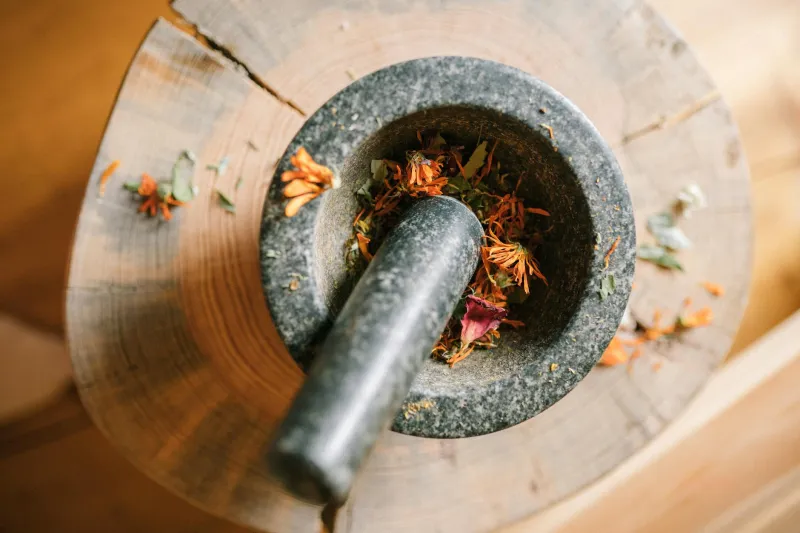
Five hundred miles north, in a basement beneath Edinburgh's New Town, Marcus Reid is performing his own brand of colour magic. His workshop feels like a medieval laboratory crossed with a modern art studio—pestle and mortars share space with pH strips, while ancient recipes for ultramarine sit alongside contemporary notes on light-fastness.
"Colour has memory," Marcus explains, grinding lapis lazuli with the intensity of someone channelling centuries of artistic tradition. "When I make this blue, I'm connecting with every artist who ever mixed this same pigment. That history, that human connection—it changes how the colour feels when you wear it."
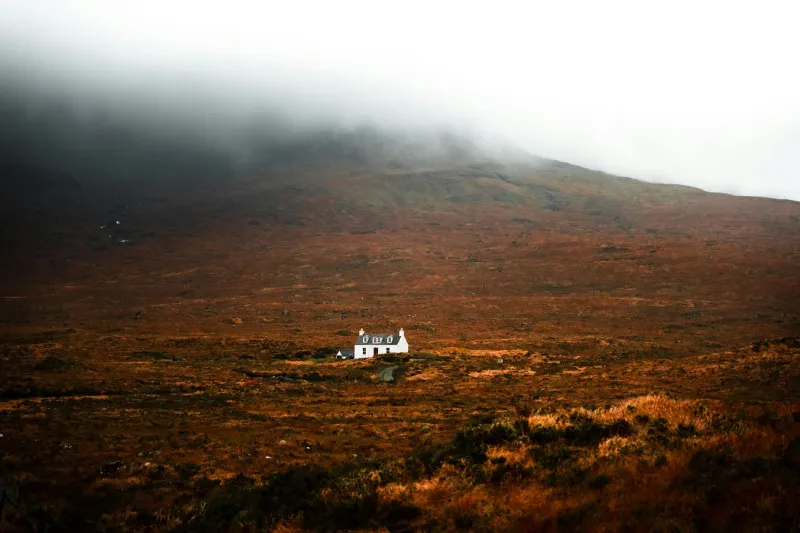
Marcus's 'Stone & Story' pigments have found devoted followers among Scotland's independent fashion scene. His 'Arthur's Seat Amber'—made from ochre gathered on the Edinburgh hills—appears on limited-edition scarves that sell out within hours of release. The colour seems to glow with internal warmth, carrying something indefinable that machine-mixed paints simply cannot replicate.
 Photo: Arthur's Seat, via c8.alamy.com
The Science of Sentiment
What makes these artisan colours so compelling isn't just their beauty—it's their authenticity. Unlike synthetic pigments designed for consistency and mass production, handmade colours carry subtle variations that speak to their origins.
"Each batch tells a slightly different story," explains Dr. Sarah Chen, a colour scientist who's been studying the artisan pigment movement. "The chalk Emma collects after a winter storm will have different mineral content than summer chalk. These micro-variations create colours that feel alive, that seem to shift and breathe with the light."
This variability, once seen as a manufacturing flaw, is now fashion's most desired quality. Independent designers are specifically seeking pigments that change character throughout the day, that age and develop patina, that connect the wearer to something larger than themselves.
Fashion's New Colour Rebels
The influence of these paint makers extends far beyond their immediate customers. Across Britain, independent fashion designers are rejecting the tyranny of trend forecasting in favour of colours that speak to place, memory, and meaning.
Consider Lily Ashworth's 'Hedgerow' collection, where every piece is dyed with pigments foraged from the Yorkshire Dales. Her 'Blackberry Twilight' dress, coloured with actual blackberry juice and iron-rich stream water, sells for £400 and has a six-month waiting list. The colour shifts from deep purple in daylight to near-black in evening light, creating a garment that's as changeable as the landscape that inspired it.
"I refuse to work with colours that don't have stories," Lily states firmly, standing in her Yorkshire studio surrounded by fabric samples that seem to glow with natural light. "Every shade in my collection could take you to the exact spot where it was born. That's not just fashion—that's wearable geography."
The Collectors' Market
This movement has spawned an unexpected collecting culture. Fashion enthusiasts are seeking out pieces coloured with specific pigments, tracking down garments made with Emma's storm-grey or Marcus's Edinburgh amber like wine collectors pursuing particular vintages.
"I have customers who'll only buy pieces if I can tell them exactly where and when the colour was made," reports James Fletcher, owner of 'Pigment & Thread', a London boutique specialising in naturally-coloured fashion. "They want the provenance. They want to know that their blue dress carries actual Scottish sky, that their green coat holds the memory of Cotswold meadows."
The most sought-after pieces come with 'colour certificates'—documents detailing the pigment's origin, creation date, and the weather conditions when it was harvested. These certificates are becoming as valuable as the garments themselves.
Beyond Beauty: The Politics of Pigment
This return to natural colour carries deeper implications than mere aesthetics. In an industry notorious for chemical pollution and environmental damage, these paint makers offer a radically different approach—one that works with nature rather than against it.
"Every synthetic pigment has a carbon footprint," notes environmental fashion consultant Rachel Green. "Every industrial dye process creates waste. But Emma collecting chalk from her local beach? Marcus grinding stones he's gathered on walks? That's not just sustainable—it's regenerative. They're creating beauty while barely disturbing the landscape."
The Future Is Handmade
As this movement grows, it's quietly undermining fashion's most fundamental assumptions about colour, consistency, and commercial viability. These paint makers have proved that consumers will pay premium prices for colours with stories, that variation can be more valuable than uniformity.
"We're witnessing a complete reversal of industrial thinking," observes fashion historian Dr. Margaret Powell. "For two centuries, we've prized consistency and repeatability. Now, the most desirable colours are the ones that can never be exactly replicated."
In their studios scattered across Britain—from coastal caves to urban basements—these colour alchemists continue their quiet revolution. They're proving that in our digital age, the most radical act might be grinding pigment by hand, that the future of fashion might just lie in its distant past, and that the most beautiful colours are the ones that remember where they came from.