She Kept Everything: The Young Brits Learning Who They Are Through a Grandmother's Wardrobe
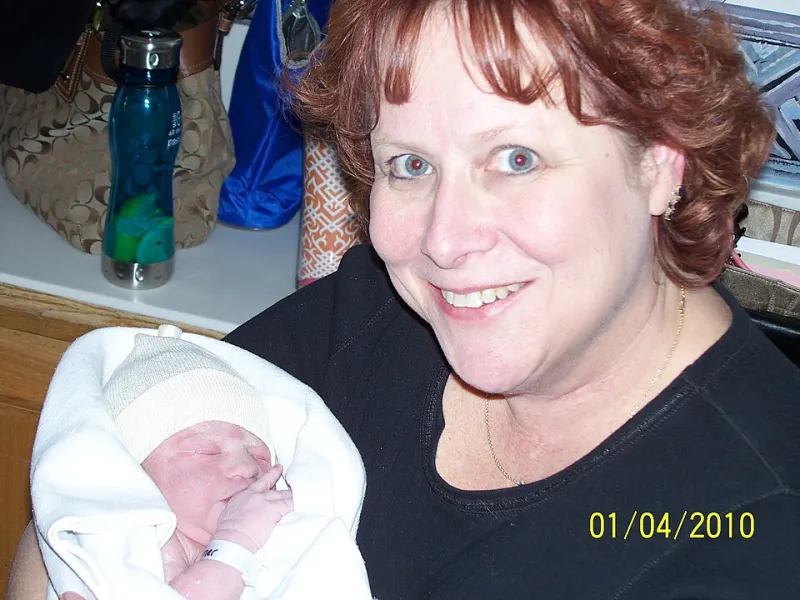
Photo: Bigroger27509, Public domain, via Wikimedia Commons
The coat is camel wool, perfectly cut, with buttons that were replaced at some point — the original ones lost to time, swapped for something close but not quite identical. It belonged to a woman who wore it to work every day for eleven years, who bought it with her first proper pay cheque, who kept it through three house moves and one divorce. It fits her granddaughter almost perfectly.
"When I wear it," says Priya, 24, from Leicester, "I feel like I'm carrying her with me. Not in a sad way. In a really powerful way."
This is the Grandmother's Closet moment — and it's happening quietly, beautifully, all over Britain.
More Than Vintage, More Than Nostalgia
There's a difference, and it matters enormously, between buying a vintage coat in a charity shop and inheriting one from a woman you love. The charity shop coat has a story, yes — but it's a story you'll never know. The inherited coat arrives with its story intact, narrated by someone who lived it, who can tell you not just what it is but why it was kept. That context transforms the garment entirely.
This is what makes the growing movement of inter-generational wardrobe sharing so compelling. It's not merely about the clothes. It's about the transmission of something harder to name — a philosophy of dressing, a set of values about quality and choice and self-presentation, a living education in what it means to dress with intention.
Jessie, 22, from Edinburgh, spent the summer before her grandmother's care home move going through every item in her wardrobe with her. "We were in there for days," she says. "Gran would pick something up and I'd think it was just a blouse, and then she'd tell me she wore it the night she met Grandad, or that she bought it in a sale and altered it herself, and suddenly it was this whole thing. It had a whole life."
Jessie came away with a suitcase of carefully folded garments, a notebook full of handwritten stories, and, she says, a completely transformed understanding of what fashion is actually for.
The Education in the Hem
What grandmothers tend to understand — and what fast fashion actively works to obscure — is the difference between buying and choosing. The women who grew up in the postwar decades, or who came of age in the sixties and seventies, often operated in a world where clothing was expensive relative to income, where a new coat was a considered decision, where you mended and altered and made things last because you had to. That constraint produced a kind of wisdom.
Carefully chosen pieces. Fewer of them. Worn often, worn well.
"My nan has maybe forty items of clothing," says Bea, 26, a fashion student from Manchester. "But every single one is right. There's nothing wasted in her wardrobe. I've learned more from studying her approach than I have from three years of fashion school, honestly."
Bea has been documenting her grandmother's wardrobe as a project — photographing each piece, recording the history of how it was acquired and what it's meant. What started as a college assignment has become something more personal and more lasting. "It's like an archive of a life lived through clothes. And it's teaching me how I want to live mine."
The Counter to Fast Fashion That Actually Works
There's no shortage of conversations about sustainability in fashion. Most of them, however well-intentioned, can feel abstract — statistics about water usage, appeals to buy less, the vague promise of a capsule wardrobe. What the grandmother's closet offers is something different: a felt alternative. A relationship with clothing that is demonstrably richer, more meaningful, and more satisfying than the cycle of trend-chasing and disposal.
You can't scroll past a memory. You can't throw away something that carries a story you know by heart.
"I think a lot of young people are hungry for this," says Priya. "We've grown up with so much disposable stuff. And then you hold something that someone kept for fifty years, and you think — oh. This is what clothes can be."
The movement is also, importantly, a two-way exchange. Grandmothers, many of whom feel their era's approach to dressing has been dismissed as old-fashioned or irrelevant, are finding enormous joy in being asked — genuinely, curiously asked — to share their knowledge. The wardrobe becomes a conversation. The conversation becomes a relationship.
The Pieces That Bridge Everything
Not everything passes between generations perfectly, of course. Some pieces are too small, too worn, too particular in their fit. Some stories are complicated — the dress worn to a difficult occasion, the coat from a relationship best forgotten. And that's all right. Inheritance is never simple. Neither is identity.
But the pieces that do cross the bridge — the coat, the silk scarf, the hand-beaded evening bag, the pair of kid leather gloves in a box that's never been opened — carry something almost impossible to manufacture. A kind of weight that has nothing to do with fabric and everything to do with meaning.
"She kept everything," says Jessie, of her grandmother. "I used to think that was just being a hoarder. Now I think she was keeping it for me."
The most radical thing you can do in a world of fast fashion might be exactly this: slow down, open the wardrobe, and listen.