Dressed in Petals & Smoke: The Perfume Collectors Building Wardrobes You Can Almost Smell
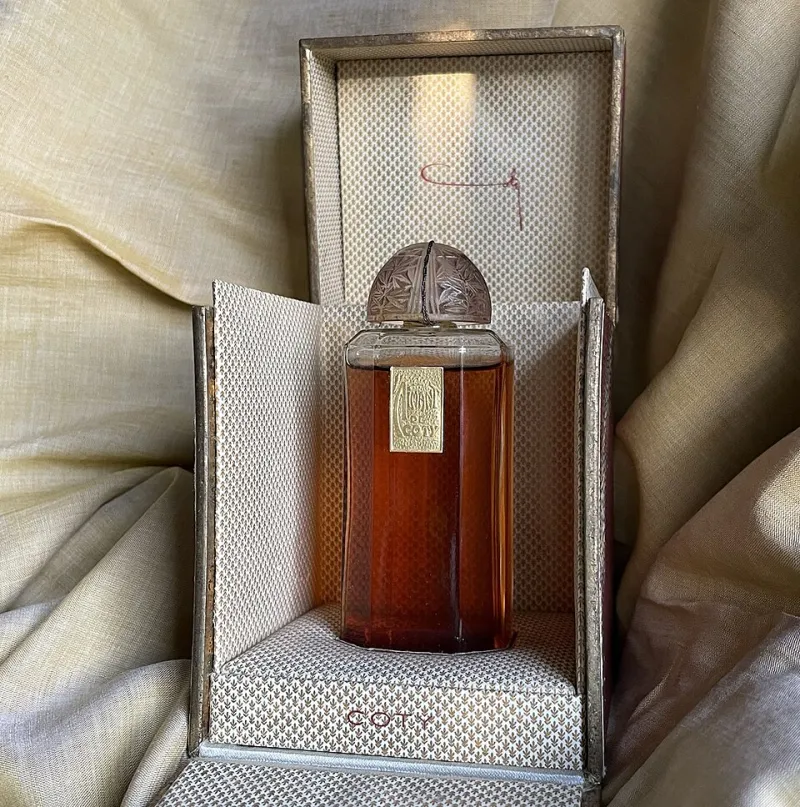
Photo: DDupard, CC BY-SA 4.0, via Wikimedia Commons
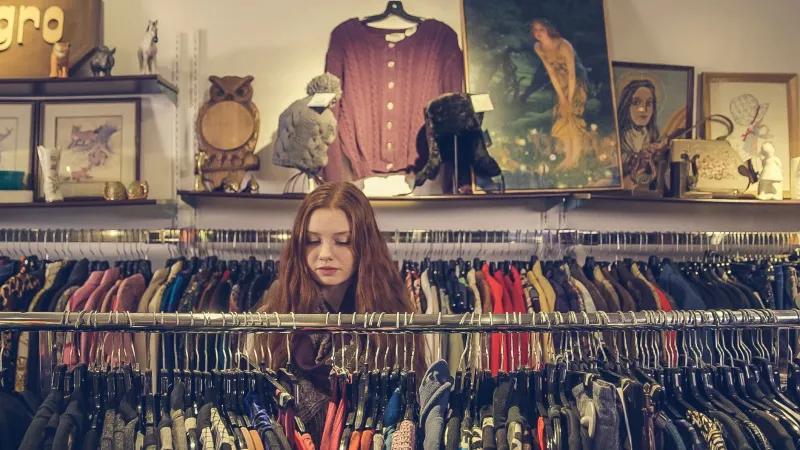
Before Saoirse Lennox gets dressed in the morning, she opens a small wooden box on her dressing table. Inside, arranged in rows like a miniature apothecary, are seventeen sample vials of perfume. She doesn't choose her outfit first. She chooses her scent. Then she gets dressed to match it.
"It sounds backwards," she admits, laughing softly, "but it's the only way that makes sense to me. The scent is the mood. The clothes are how I make the mood visible."
Saoirse, a librarian and vintage clothing collector from Glasgow, is part of a quietly growing community of British dressers who have begun treating fragrance not as the finishing touch to an outfit, but as its invisible architecture — the thing everything else is built around.
The Invisible Garment
Perfume has always had a relationship with fashion, of course. Couture houses have sold scent as an extension of their aesthetic universe for over a century. But what's happening in living rooms and bedroom studios across Britain right now feels different — more personal, more exploratory, and considerably less interested in brand prestige.
These are not necessarily people buying the big designer names. Many are deep in the world of niche and artisan perfumery: small British houses, independent natural perfumers, botanical distillers working out of converted outbuildings in Wales or the Scottish Borders. The scents they seek are complex, sometimes strange, often deeply rooted in landscape and memory.
And they are choosing their clothes to resonate with them.
"I have what I think of as my 'dark forest' wardrobe," says Marcus Webb, a graphic designer and perfume collector based in Birmingham. "Deep greens, mossy textures, mushroom-coloured wools. And I wear those pieces with resins and vetiver and oakmoss — scents that feel like walking into old trees. The visual and the olfactory are doing the same work. They're telling the same story."
Memory, Emotion, and the Clothed Body
The science of this is genuinely fascinating. Of all the senses, smell is most directly connected to the limbic system — the part of the brain responsible for emotion and memory. A scent can transport you in a way that a colour or a texture simply cannot, bypassing rational thought entirely and landing somewhere older and more instinctive.
For the dressers in this community, that neurological directness is exactly the point. They're not just assembling outfits. They're constructing emotional environments that they carry with them through their days.
"I have a scent that smells like the beach where my grandmother used to take me as a child — salt, seaweed, a little cold," says Amara Osei, a textile designer from Cardiff. "When I wear it, I wear pale grey linens and washed-out blues. Not because I planned it that way, but because that's what that memory looks like. That's what it feels like to be in that place."
Amara describes her wardrobe as a kind of emotional atlas. Different sections correspond to different inner landscapes: the warm amber and rust tones that go with her smoky incense-forward fragrances; the sharp, green, almost medicinal scents that she pairs with structured tailoring and clean lines; the soft, powdery florals that belong to her most languid, unstructured pieces — oversized cardigans, wide-leg trousers, fabrics that move like water.
Fabric and Fragrance: A Sensory Conversation
There's also a practical dimension to all of this that the more technically minded dressers in this community have become quietly expert in. Different fabrics interact with fragrance in fundamentally different ways. Natural fibres — wool, cotton, linen, silk — absorb and release scent gradually and beautifully, developing over the course of a day. Synthetic fabrics can trap certain molecules, altering the dry-down of a fragrance in ways that are sometimes magical and sometimes disastrous.
"I stopped wearing a lot of polyester blends because they were changing my perfumes in ways I didn't like," says Freya Hollingsworth, who runs a small newsletter about niche fragrance from her flat in Brighton. "Now I think about fabric and scent together, the way you'd think about food and wine pairing. Some combinations are extraordinary. Some are just wrong."
Freya has developed what she calls her 'sillage wardrobe' — pieces specifically chosen for their ability to carry and project fragrance beautifully. Loose-woven wools. Heavyweight silks. Brushed cotton in deep, saturated colours. "The fabric becomes part of the scent experience," she explains. "The way it moves, the way it releases warmth when you move — it's all part of the same sensory event."
Colour as Olfactory Translation
Perhaps the most enchanting aspect of this community is the way they translate scent into visual language — and specifically into colour.
Ask any of them to describe a fragrance and they'll often reach instinctively for colour. Bergamot is sharp yellow-green. Oud is deep maroon and old gold. Neroli is the exact white of something just about to bloom. Vetiver is the grey-green of winter fields.
This synesthetic translation — scent becoming colour becoming cloth — is at the heart of how their wardrobes are assembled. It's not a rigid system. It's more like a conversation between senses, a back-and-forth that produces something none of the individual elements could produce alone.
"I think about it as harmonics," says Marcus. "The scent is the note. The colour is the overtone. The texture is the resonance. When they're all aligned, it's like — you feel it rather than see it."
The Most Personal Wardrobe in the Room
What strikes you, talking to these dressers, is how intensely private all of this is — and how liberating that privacy feels. No one can see your scent. No one can immediately decode the relationship between your cedar-and-violet perfume and your plum-coloured velvet coat. The connection lives in you, in your memory and your emotion and your particular sensory world.
In a fashion culture increasingly oriented towards visibility and legibility — towards outfits that communicate clearly and immediately — there's something quietly radical about building a wardrobe around something invisible.
It's fashion for yourself, in the most complete sense of the phrase. Dressed not for the room, but for the whole, complex, scented interior world you carry with you wherever you go.
And honestly? That sounds absolutely gorgeous.