Bedroom Printmakers: The Riso Rebels Sketching Britain's Next Fashion Revolution
The Quiet Revolution Happening in Britain's Back Bedrooms
There's something beautifully subversive happening in the converted spare rooms and garden sheds across Britain. While fashion weeks parade their predictable parade of trends, a growing tribe of illustrator-designers are busy creating something infinitely more compelling: clothes that feel like they've been plucked straight from someone's most treasured sketchbook.
These aren't fashion graduates following prescribed paths through design houses. These are artists who happened to fall in love with fabric, printmakers who discovered that T-shirts make rather excellent canvases, and dreamers who realised that the gap between 'drawing something gorgeous' and 'wearing something gorgeous' might be smaller than anyone imagined.
When Illustration Meets Instinct
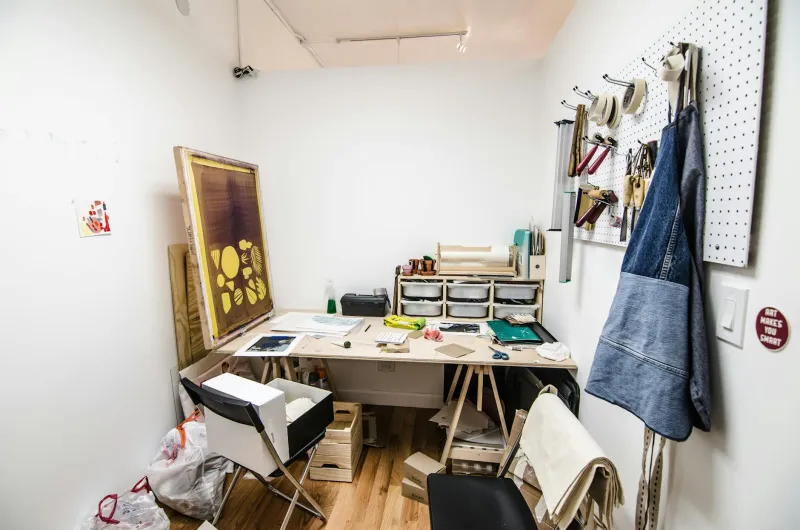
Take Lucy Chen, whose Bristol-based label 'Midnight Creatures' emerged from her obsession with nocturnal wildlife sketches. "I was filling notebooks with drawings of urban foxes and city bats," she explains, surrounded by towers of Risograph prints in her converted garage studio. "Then I thought: why shouldn't these little creatures live on clothes too?"
 Photo: Lucy Chen, via i.pinimg.com
Her approach epitomises this movement's refreshing directness. No trend forecasters, no focus groups, no seasonal collections dictated by retail calendars. Just Lucy, her Riso machine (a Japanese printing technology beloved for its distinctive, slightly imperfect aesthetic), and an endless supply of creatures that seem to emerge fully formed from her imagination onto rice paper, then onto organic cotton.
The results feel startlingly alive. Her 'Sleepy Hedgehog' jumper, with its hand-drawn spines rendered in earthy Riso inks, has a three-month waiting list. Each piece carries the subtle variations that come from hand-printing, making every garment genuinely unique.
The Technology That Changed Everything
The democratisation of Risograph printing has been crucial to this movement's emergence. These machines, originally designed for office use in 1980s Japan, produce prints with a distinctive, slightly grainy quality that feels warmly analogue in our digital age. More importantly for cash-strapped artists, they're relatively affordable and perfect for small-batch production.
"You can set up a Riso studio for less than the cost of a decent second-hand car," explains Tom Bradley, whose Manchester-based 'Pencil & Thread' has become cult-followed among illustration enthusiasts. "Suddenly, the barrier between having an idea and making it real becomes much smaller."
Tom's journey from freelance illustrator to fashion micro-entrepreneur began during lockdown, when cancelled commissions left him with time and nervous energy. "I started printing my botanical drawings onto tea towels for friends, then someone asked if I could do the same design on a shirt. Six months later, I was accidentally running a clothing brand."
The Hunger for Human-Made
What's driving consumers toward these bedroom-born brands isn't just their aesthetic appeal—though the hand-drawn, slightly imperfect beauty is undeniably compelling. It's the story each piece carries, the knowledge that somewhere in Britain, someone sat down with a pencil and dreamed this design into existence.
"People are starving for authenticity," observes Sarah Mitchell, who documents independent fashion for her newsletter 'Small Batch Britain'. "Fast fashion has made everything feel anonymous and disposable. These illustrator-led labels offer the complete opposite: clothes with visible human fingerprints, made by people whose names you know."
The numbers support this hunger. Etsy UK reports a 340% increase in searches for 'hand-printed clothing' over the past two years, while independent fashion platforms like Folksy have seen similar surges in demand for artist-made apparel.
Beyond the Bedroom: Building Sustainable Futures
What started as pandemic passion projects are evolving into genuinely sustainable businesses. Many of these illustrator-designers are discovering that their intimate scale actually offers advantages over traditional fashion models.
"I know exactly who's buying my pieces," says Edinburgh-based Mira Patel, whose 'Dreaming in Colour' label features her watercolour paintings transformed into flowing scarves and kimonos. "I get messages from customers showing me how they've styled pieces, or telling me which painting inspired them to make a purchase. It's like having a conversation through clothes."
 Photo: Mira Patel, via fapullo.com
This direct relationship allows for responsive design—Mira can test new patterns on social media, gauge interest, and adjust production accordingly. No overstock, no waste, no guessing what might sell six months from now.
The Future Looks Hand-Drawn
As this movement matures, it's beginning to influence broader fashion conversations. Major brands are taking notice, with some attempting to replicate the hand-drawn aesthetic through digital means. But there's something they can't replicate: the genuine creative passion that drives someone to convert their spare room into a print studio.
"The big brands can copy the look," Tom reflects, adjusting a freshly printed 'Rainy Day Mushrooms' hoodie on his drying rack. "But they can't copy the feeling. They can't copy the fact that I drew these mushrooms during an actual rainy day walk in Chorlton, thinking about how beautiful decay can be."
For the wonderfully curious among us, these bedroom printmakers offer something increasingly rare: clothes that feel like secrets shared, sketches made wearable, dreams you can actually put on. In a world of algorithmic recommendations and mass-produced everything, perhaps the most radical act is simply drawing what you love and trusting others to love it too.