Beautiful Scars: How Visible Mending Became Britain's Most Rebellious Love Language
The Art of Loving Things Broken
There's a revolution happening in charity shops, university halls, and kitchen tables across Britain. It's quiet, meditative, and utterly transformative—the simple act of choosing to repair rather than replace, to celebrate damage rather than hide it, to turn necessity into art.
This is visible mending: the practice of repairing clothes in ways that highlight rather than disguise the repair. Rooted in Japanese traditions like sashiko (decorative reinforcement stitching) and kintsugi (golden repair), Britain's interpretation has evolved into something distinctly our own—a blend of practical thrift, environmental consciousness, and an almost punk-rock rejection of perfection.
In a culture that's spent decades teaching us to discard the damaged, these menders are staging the gentlest rebellion imaginable: they're making broken things beautiful.
The Philosophy of Imperfection
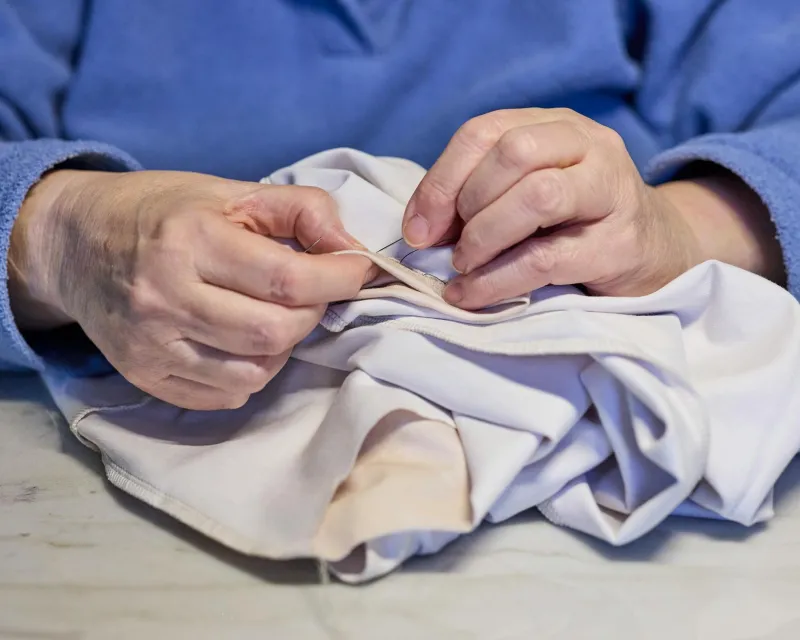
Walk into any repair café across Britain—from Brighton community centres to Glasgow church halls—and you'll witness something remarkable. People hunched over garments with needles and thread, not trying to make damage disappear, but celebrating it. A ripped knee becomes a garden of embroidered flowers. A moth hole transforms into a constellation of tiny stars.
"We've been brainwashed to think that damaged equals worthless," explains Kath Morrison, who runs monthly mending circles in her Edinburgh home. "But what if the opposite were true? What if the places where things break are actually where they become most interesting?"
Kath's own wardrobe tells stories through its repairs. A cardigan inherited from her grandmother bears intricate sashiko stitching where moths once fed. A favourite dress displays a rainbow of darning where years of wear created holes. Each repair is a diary entry, a moment when care triumphed over convenience.
More Than Mending: A Cultural Shift
This movement represents something far deeper than practical repair skills. In a society where everything feels disposable—relationships, jobs, even identities—the act of mending becomes profoundly political. It's a declaration that some things are worth saving, worth the time and effort required to make them whole again.
"When I teach visible mending, I'm not just teaching stitches," says Maria Santos, whose London workshops have six-month waiting lists. "I'm teaching a different relationship with time, with objects, with the idea of value itself."
Maria's students arrive carrying damaged clothes but leave with something more valuable: a new understanding of what it means to care for things. Her 'Mending Manifestos'—artistic statements created through repair—have been exhibited in galleries across Europe, challenging traditional boundaries between craft and fine art.
The Technique Revolution
While traditional invisible mending aimed to erase all traces of damage, visible mending celebrates the repair as part of the garment's story. The techniques are varied and beautiful:
Sashiko stitching creates geometric patterns that strengthen fabric while adding visual interest. Originally used by Japanese farmers to extend the life of work clothes, it's been embraced by British menders who appreciate its meditative rhythm and striking aesthetic.
Decorative darning turns holes into opportunities for creative expression. Rather than matching thread colours, menders choose contrasting shades that highlight their work, creating patches that seem to glow against the original fabric.
Patch artistry elevates the humble patch from functional necessity to design feature. Embroidered patches, painted patches, patches cut from beloved but unwearable garments—each tells a story while solving a problem.
The Community of Care
Perhaps the most beautiful aspect of Britain's mending movement is its community spirit. Repair cafés have sprung up in community centres, libraries, and homes across the country, creating spaces where skills are shared freely and stories are exchanged over needlework.
"It's become my favourite social activity," admits Tom Chen, a Manchester software developer who discovered mending during lockdown. "There's something incredibly calming about sitting with others, working with your hands, making something better. It's the opposite of everything our culture tells us to value—speed, newness, efficiency."
These gatherings often become deeply emotional spaces. People bring clothes loaded with memory—a father's jumper, a wedding dress, a child's first school uniform—seeking not just repair but connection. The act of mending together creates bonds that extend far beyond the fabric being worked on.
Fashion's New Luxury
The influence of visible mending is rippling through British fashion in unexpected ways. High-end designers are incorporating deliberate 'damage' and visible repairs into new collections, while vintage sellers report increased demand for pieces that show their age and wear.
"Perfection has become boring," observes fashion curator Dr. Amanda Wright. "The most interesting pieces now are the ones that show life, that carry stories in their fibres. Visible mending has taught us that imperfection can be more beautiful than perfection."
Some of Britain's most innovative young designers are building entire collections around the aesthetic of repair. Sophie Turner's 'Mended' line features new garments that incorporate vintage darning and sashiko techniques, while James Fletcher's 'Second Life' collection is made entirely from discarded clothes that have been transformed through visible mending.
The Environmental Imperative
Beyond aesthetics and philosophy lies an urgent environmental argument. The fashion industry is one of the world's largest polluters, with the average UK household throwing away 30kg of clothing annually. Visible mending offers a radical alternative: what if we simply stopped throwing clothes away?
"Every repair is an act of environmental activism," argues Dr. Sarah Green, who studies sustainable fashion at Central Saint Martins. "It's a refusal to participate in the cycle of consumption that's destroying our planet. And making repairs beautiful ensures they'll be treasured rather than hidden."
The numbers support this optimism. Research by the Ellen MacArthur Foundation suggests that extending the average life of clothes by just nine months could reduce carbon, waste, and water footprints by 20-30% each.
Teaching the Next Generation
Perhaps most encouragingly, visible mending is finding enthusiastic adoption among young people who've grown up in fast fashion's heyday. Universities report growing interest in mending workshops, while social media overflows with young menders sharing their latest repairs.
"My generation was raised on disposability," explains 22-year-old student Emma Parker, whose Instagram account @MendedWithLove has 50,000 followers. "But we're also the generation that understands climate change isn't optional. Mending feels like hope—like we can literally stitch together a better future."
Emma's posts showcase repairs that are artworks in their own right: denim jackets transformed into botanical gardens through embroidered patches, jumpers that tell stories through their carefully chosen darning colours. Her followers share their own repairs, creating a global community connected by thread and intention.
Beyond the Stitch: A New Aesthetic
What's emerging from Britain's mending movement is more than a craft revival—it's a new aesthetic that celebrates history, imperfection, and the beauty of care made visible. Mended clothes carry a patina that new garments simply cannot replicate: the accumulated evidence of a life well-lived.
"There's something deeply moving about clothes that show they've been loved," reflects textile artist Rachel Morrison, whose 'Mended Memories' exhibition toured British galleries last year. "Every repair is someone saying: this matters enough to save. In our throwaway culture, that's a radical act of faith."
As this movement grows, it's quietly rewriting the rules of what makes clothing valuable. Not newness, but history. Not perfection, but character. Not hiding damage, but celebrating survival.
In their sitting rooms and community centres, armed with needles and determination, Britain's menders are proving that the most beautiful things are often the ones that have been broken and carefully put back together. They're teaching us that love isn't about keeping things pristine—it's about caring enough to repair what's damaged, to make it whole again, to make it even more beautiful than before.