The Art of Seeing Differently
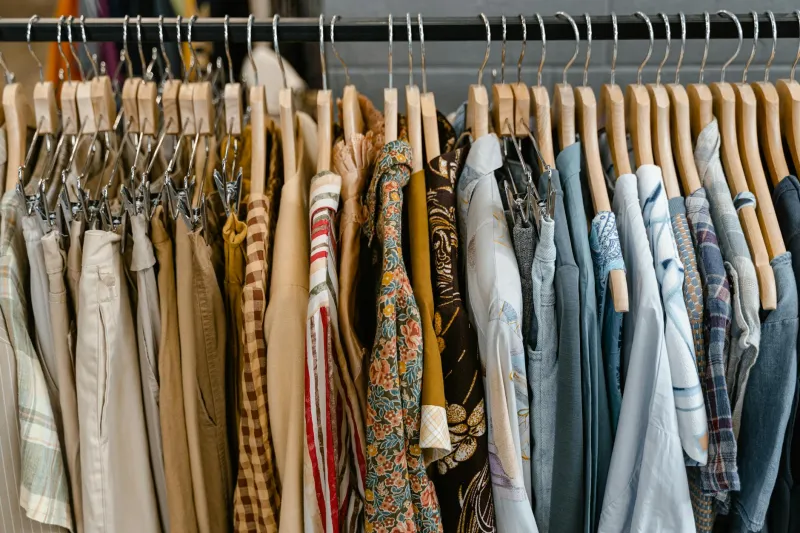
In a British Heart Foundation shop in Hackney, Kemi Adebayo runs her fingers along a rail of rejected blazers, each one dismissed by dozens of shoppers before her. Where others see dated shoulder pads and questionable colour choices, Kemi sees raw material for magic.
"This burgundy number from 1987? Perfect base for my deconstructed blazer series," she murmurs, pulling out what appears to be a perfectly ordinary—and ordinarily hideous—piece of corporate wear. "The bones are beautiful. Everything else is just noise."
Kemi represents a growing tribe of British creatives who have elevated charity shop hunting from budget necessity to high art. These aren't your typical bargain hunters—they're visual alchemists, transforming the unwanted into the utterly covetable through sheer force of imagination.
The Regional Treasure Maps
What's remarkable is how Britain's charity shop geography has created distinct creative ecosystems. In Edinburgh, the abundance of vintage tweeds and academic cast-offs has spawned a movement of creators who specialise in scholarly-chic reconstructions. Glasgow's industrial heritage means charity shops overflow with workwear that gets reimagined into avant-garde streetwear.
Down south, Brighton's charity shops reflect the city's artistic transience—a constant flow of creative types moving in and out, leaving behind eclectic wardrobes that become fodder for the next wave of makers. "Brighton charity shops are like archaeological sites of British bohemia," explains local creator Jazz Pemberton, who's built a cult following by transforming vintage festival gear into contemporary statement pieces.
Meanwhile, London's charity shop scene varies wildly by postcode. Notting Hill's shops yield designer cast-offs that require minimal intervention, while East London's stores offer more democratic treasures that demand serious creative vision to unlock their potential.
The Patience of Prophets
What separates these visionary thrifters from casual browsers is their supernatural patience. Manchester's David Chen visits the same twelve charity shops every Tuesday, building relationships with volunteers who text him when something special arrives.
"It's not about finding the perfect piece," David explains, showing me his latest acquisition—a 1990s sequined evening gown that he's planning to deconstruct into a series of sparkling bomber jackets. "It's about finding the piece that wants to become something else. You have to listen to what the garment is telling you."
This mystical approach to secondhand shopping has created an almost spiritual community. These creators speak of "calling" certain pieces to them, of garments that "choose" their new owners. It sounds fanciful until you see the results—transformations so radical and beautiful that they seem to have been guided by some higher fashion force.
The Alchemy Process
The transformation techniques are as varied as the creators themselves. Some, like Liverpool's Sarah Mitchell, specialise in "frankenstein fashion"—combining elements from multiple garments to create entirely new silhouettes. Others focus on surface treatments, using everything from bleach to embroidery to completely reimagine a piece's personality.
Then there are the pure deconstructionists, like Cardiff's Alex Turner, who takes apart garments completely before rebuilding them according to their own design logic. "I bought a 1980s power suit for £8 and turned it into a gender-fluid jumpsuit that sold for £200," Alex grins. "The original designer would probably be horrified, but that's the point—fashion should evolve."
The Economics of Imagination
What's particularly British about this movement is how it marries thrift with creativity out of necessity. With new clothes becoming increasingly expensive and environmentally questionable, these creators have turned constraint into innovation.
"I can't afford to shop at Selfridges, but I can afford to shop at Cancer Research UK and then spend forty hours turning a £5 dress into something that stops traffic," says Birmingham's Fatima Al-Rashid, whose reconstructed vintage pieces have gained a following among fashion students and young professionals alike.
This economic reality has created a fascinating parallel fashion ecosystem where creativity matters more than capital, where the ability to envision transformation is more valuable than the ability to afford designer prices.
The Community of Outcasts
Perhaps most importantly, this movement has created a community of creative outcasts who share tips, techniques, and most crucially, their vision. Social media has allowed these scattered visionaries to find each other, creating online spaces where someone in Newcastle can inspire someone in Plymouth to see a charity shop blazer in an entirely new light.
"We're like a secret society, but instead of world domination, we're after wardrobe transformation," jokes Leeds creator Marcus Wong, whose TikTok tutorials on charity shop alchemy have gained hundreds of thousands of followers.
The Philosophy of Potential
Underneath all the cutting, sewing, and reimagining lies a profound philosophy about potential—both of clothes and people. These creators see beauty where others see waste, possibility where others see problems.
"Every garment in a charity shop represents someone's story—their hopes, their mistakes, their changes in circumstance," reflects London's Isabella Santos, whose work transforms discarded evening wear into everyday magic. "When I remake these pieces, I'm not just changing the clothes—I'm continuing their story, giving them new chapters."
This isn't just fashion; it's emotional archaeology, creative activism, and practical magic rolled into one. In a world of fast fashion and disposable culture, these charity shop alchemists are proving that the most beautiful transformations happen not when we buy something new, but when we see something old with completely fresh eyes.
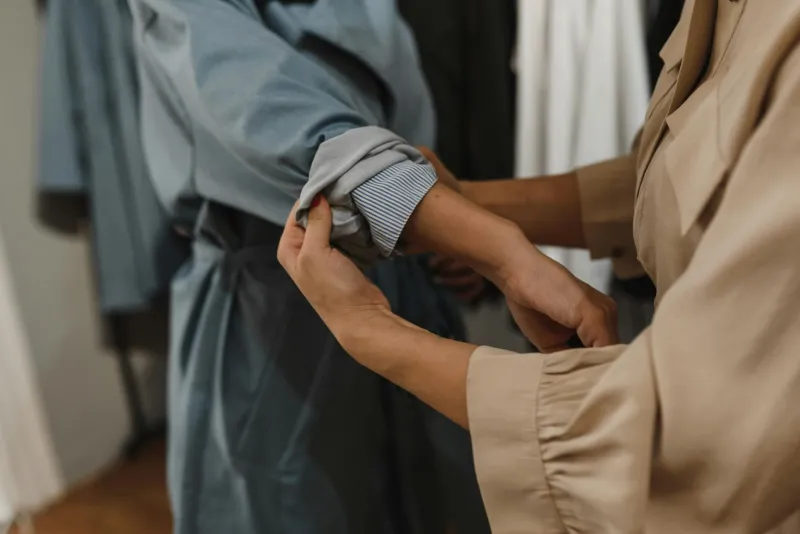
As Kemi in Hackney puts it, adjusting a reconstructed blazer that started life as office wear and ended up as wearable art: "Anyone can buy taste. But seeing it where it doesn't yet exist? That's a superpower."