When Art Meets Atelier
There's something deliciously rebellious happening in Britain's fashion landscape, and it's got nothing to do with runway trends or seasonal forecasts. In converted Victorian warehouses across Manchester, beneath railway arches in South London, and tucked away in Edinburgh's cobbled closes, tattoo artists are swapping their machines for sewing needles, translating the intimate art of skin into the broader canvas of clothing.
What started as a whispered conversation between underground cultures has exploded into a full-throated creative revolution. Britain's tattoo artists—long the guardians of folklore, botanical beauty, and visual storytelling—are discovering that their distinctive visual language translates magnificently onto fabric, leather, and metal.
The New Creative Cartographers
Take Sarah Chen, whose delicate blackwork roses once graced the shoulders of London's creative elite. Now, her botanical illustrations bloom across silk scarves and cotton tees under her label 'Thorn & Thread'. "The transition felt natural," she explains from her Shoreditch studio, where flash sheets hang alongside fabric swatches. "Both mediums are about telling stories on bodies—whether that's human skin or the body of a garment."
Chen's not alone in this artistic migration. Across Britain, tattoo artists are finding their visual vocabulary—that unique blend of traditional flash art, contemporary illustration, and deeply personal symbolism—perfectly suited to fashion's current hunger for authentic, story-driven design.
From Flash Art to Fashion Forward
The aesthetic crossover isn't accidental. British tattoo culture has always been a melting pot of influences: sailor Jerry's bold lines meet Celtic knotwork, Japanese-inspired florals intertwine with punk-era iconography. This visual richness, honed through years of working with permanent ink, creates designs that feel both timeless and urgently contemporary when translated to textiles.
In Glasgow, Marcus Webb has built a cult following for his 'Folklore Threads' collection, where traditional Scottish symbols dance across bomber jackets and denim. His thistle motifs, originally designed for skin, now cascade down the sleeves of oversized hoodies worn by everyone from art students to indie musicians. "There's something powerful about wearing your symbols externally," Webb muses. "It's like temporary tattoos for people who aren't ready for the permanent commitment."
The Technique Revolution
What makes this movement particularly fascinating is how tattoo artists are adapting their technical skills to new mediums. The same steady hand that creates perfect line work on skin translates beautifully to screen printing. The understanding of how designs flow across curved surfaces—essential when tattooing—proves invaluable when creating patterns that complement the human form in fabric.
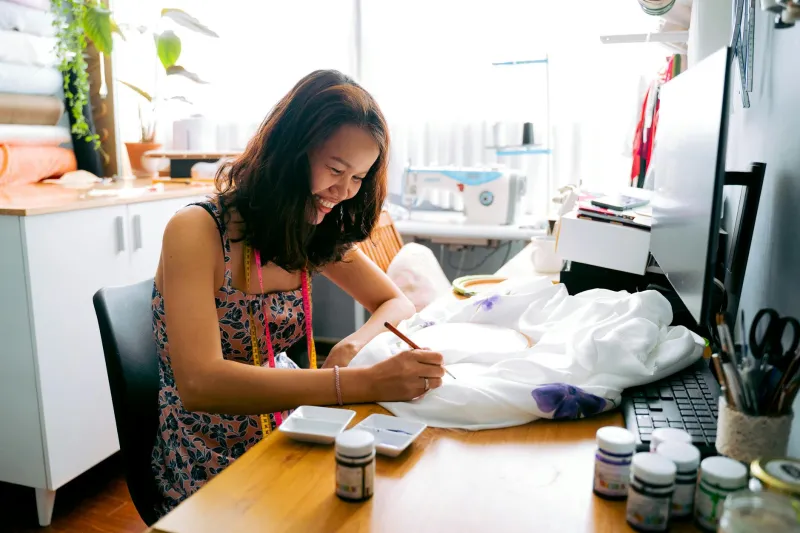
London-based artist Zara Blackwood has pioneered a technique she calls 'textile tattooing'—using fabric paints and fine brushes to hand-paint directly onto garments. Each piece is unique, bearing the same one-off quality that makes tattoos so precious. Her waiting list stretches six months, with clients commissioning everything from wedding jackets to memorial pieces.
Beyond the Needle: A Cultural Shift
This isn't just about artists diversifying their income streams (though the practical benefits are undeniable). It represents a broader cultural shift in how we think about personal expression and artistic authenticity. In an era of fast fashion and mass production, these artist-designed pieces offer something increasingly rare: genuine connection between creator and wearer.
The timing couldn't be more perfect. Britain's fashion consumers, particularly younger demographics, are actively seeking alternatives to mainstream retail. They want pieces with provenance, with stories, with soul. Tattoo artists, who've spent years perfecting the art of meaningful personal symbolism, are uniquely positioned to meet this demand.
The Community Canvas
Perhaps most importantly, this crossover is strengthening both communities. Fashion brands gain access to an entirely new visual language and aesthetic authenticity. Tattoo artists expand their creative horizons while maintaining their artistic integrity. The result is a thriving ecosystem where creativity flows freely between mediums.
Brighton's 'Ink & Textile' collective exemplifies this collaborative spirit. Founded by three tattoo artists and two fashion designers, they host monthly workshops where techniques are shared, boundaries blurred, and new hybrid art forms born. Their pop-up exhibitions regularly sell out, drawing crowds who appreciate both the craftsmanship and the cultural crossover.
Stitching the Future
As we move deeper into 2025, this movement shows no signs of slowing. Major fashion weeks are beginning to notice, with several tattoo-artist-turned-designers receiving invitations to showcase their collections. What started as an underground creative experiment is becoming a legitimate force in British fashion.
The beauty lies not just in the aesthetic outcome, but in the process itself—the way traditional boundaries dissolve when creativity is given free rein. These artists aren't abandoning their tattoo practice; they're expanding it, proving that true artistic vision transcends medium.
In a world increasingly hungry for authenticity and personal connection, Britain's tattoo artists are stitching together something genuinely revolutionary: fashion that carries the same emotional weight, technical skill, and cultural significance as the art they've spent years perfecting on skin. The future of British style, it seems, is being inked one stitch at a time.