When Print Meets Pattern
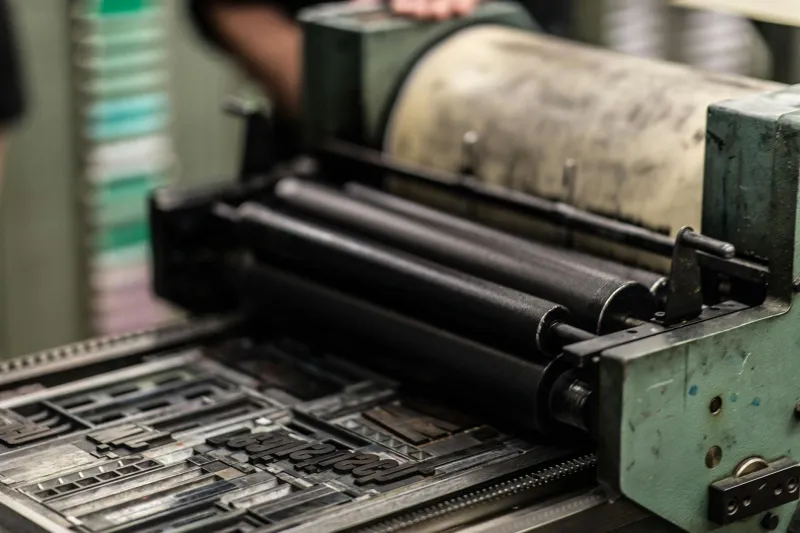
There's something utterly bewitching about watching a risograph machine work its magic. The mechanical whirr, the deliberate imperfection, the way colours layer like watercolour dreams bleeding into reality. In studios tucked away in converted warehouses across Manchester, Brighton, and Glasgow, a quiet revolution is happening—one that's translating the beloved chaos of British zine culture directly onto our clothes.
Whilst the fashion world obsesses over pixel-perfect digital prints and flawless finishes, a growing tribe of creator-makers is embracing the beautiful accidents that only analogue printing can deliver. These are the artists who fell in love with risograph's quirky personality—its tendency to misregister colours just so, creating those signature halos and unexpected colour combinations that feel like happy accidents from a dream.
The Accidental Alchemists
Take Mira Chen, whose Peckham studio houses both her zine press and her fledgling fashion line, 'Midnight Editions.' "I started making zines about urban folklore—those strange little stories that bubble up in cities," she explains, running her fingers over a jumper screen-printed with her signature riso aesthetic. "But I kept thinking, why should these images only live on paper? Why can't they wrap around bodies and walk through the world?"
Her garments carry the DNA of riso printing—that slightly off-kilter charm where magenta bleeds into cyan, creating unexpected purples that digital design could never replicate. Each piece feels like it was born from a late-night creative fever dream, which, Chen admits, many of them were.
Up in Hebden Bridge, textile artist Jamie Northcott has built an entire fashion philosophy around what he calls "beautiful mistakes." His collective, 'Wonky Press,' transforms riso artwork from local zine makers into limited-edition clothing drops. "There's something deeply human about riso's imperfections," he muses. "In a world where everything feels algorithmically perfect, wearing something with a bit of wobble feels like rebellion."
The Poetry of Imperfection
What makes this movement so compelling isn't just the aesthetic—it's the philosophy. These aren't clothes designed by committee or focus-grouped into submission. They're born from the same spirit that drives someone to stay up until 3am, hand-folding zines about obscure British subcultures or forgotten urban legends.
The process itself becomes part of the story. Watch artist Kaia Okafor at work in her Tottenham studio, and you'll see her treating each screen-print like a collaborative dance with her equipment. "My riso machine has moods," she laughs, adjusting the pressure on a print run of tote bags. "Some days it wants to be precise, other days it's feeling more... interpretive. I've learned to work with its personality rather than against it."
This embrace of the uncontrollable creates clothing that feels alive, unpredictable. A batch of t-shirts might emerge with slightly different colour saturation, each one a unique iteration of the same design. It's the antithesis of fast fashion's mechanical reproduction—every piece carries the fingerprint of its making.
Stories Worn on Sleeves
The crossover from zine culture to fashion feels inevitable when you understand the shared DNA. Both movements celebrate the handmade, the underground, the slightly subversive. Zines have always been about giving voice to the margins, and these clothing pieces carry the same energy—they're conversation starters, identity markers for those who value creativity over conformity.
London-based collective 'Rogue Editions' exemplifies this perfectly. Founded by three former art students who bonded over late-night riso sessions, they've created a hybrid space where zine launches double as fashion shows. Their latest collection, inspired by British folklore reimagined through a contemporary lens, features jackets printed with ghostly riso interpretations of local legends.
"We're not trying to compete with high street fashion," explains collective member Sam Torres. "We're creating pieces for people who want to wear their curiosity, who understand that the slight smudge on a print isn't a flaw—it's a feature."
The Midnight Economy
Perhaps most enchanting is how this movement operates outside traditional fashion calendars. These aren't seasonal collections dictated by buying teams—they're spontaneous eruptions of creativity. A new zine might inspire a capsule collection that drops three weeks later, available only until the print run sells out.
This approach creates an almost mystical relationship between maker and wearer. When you buy a riso-printed jacket from a small collective, you're not just purchasing clothing—you're supporting an entire ecosystem of creativity that spans literature, art, and fashion.
The imperfection that riso printing brings isn't just aesthetic—it's philosophical. In choosing clothes that celebrate the handmade over the mass-produced, wearers are making a statement about what they value: authenticity over perfection, story over status, wonder over conformity.
As digital design grows ever more polished and predictable, there's something deeply satisfying about wearing art that could only have been made by human hands working with temperamental machines. It's fashion that carries the midnight oil of its making, the passion of its creators, and the beautiful accidents that make each piece irreplaceably unique.
In a world that often feels designed by algorithm, these riso rebels are stitching soul back into our wardrobes, one wonky, wonderful print at a time.