When Doodles Become Dynasties
In a cramped studio above a chip shop in Brighton, Sarah Chen is carefully heat-pressing her latest drawing onto a vintage band tee. The illustration — a wonky-eyed cat wearing mismatched socks — will sell out within hours of hitting her Instagram story. Welcome to the sketch-first fashion revolution, where Britain's most interesting illustrators are turning their personal scribbles into cult collections without ever setting foot in a traditional fashion house.
"I started drawing these weird little characters during lockdown," Sarah explains, showing me a tower of sketchbooks that reaches almost to her ceiling. "People kept asking if they could buy them on t-shirts, so I thought, why not?" Three years later, her brand 'Wonky Wonders' has a waiting list of 2,000 people for every limited drop.
Sarah isn't alone in discovering that authenticity sells better than perfection. Across Britain, a new wave of artist-entrepreneurs are bypassing traditional fashion gatekeepers entirely, building devoted communities around their unpolished, deeply personal aesthetic.
The Beauty of the Unfinished
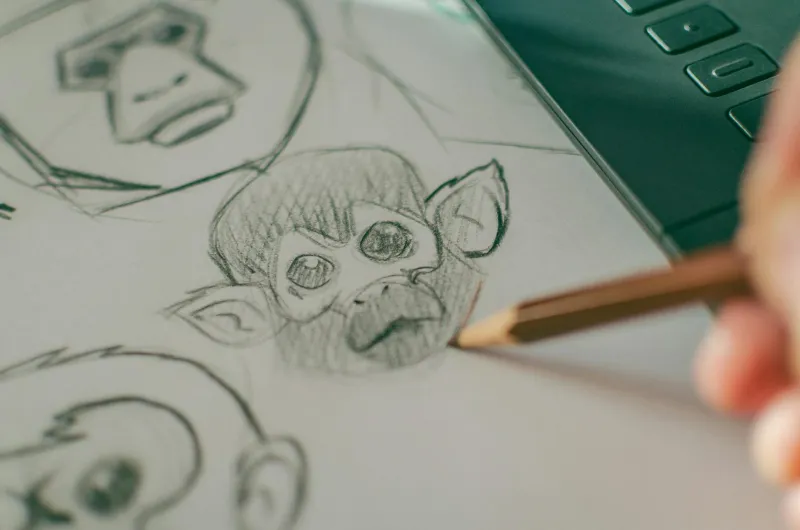
What makes these collections so compelling isn't their technical prowess — it's their beautiful imperfection. Take Manchester-based illustrator Jamie Morrison, whose "Midnight Monsters" series features creatures that look like they've been drawn by a particularly imaginative eight-year-old. "I deliberately keep them rough around the edges," Jamie tells me over video call, a half-finished drawing of a three-legged dragon visible on the easel behind him. "People are so tired of seeing the same glossy, Instagram-perfect aesthetic everywhere. They want something that feels real."
Jamie's approach is refreshingly anti-algorithm. He prints small runs of 50-100 pieces, often selling them at local markets or through word-of-mouth recommendations. "I'm not trying to build the next Zara," he laughs. "I just want to make clothes that tell stories."
From Sketch to Street
The process these artist-designers follow is beautifully simple. Most start with personal sketchbooks — the kind of doodle-filled notebooks we all had at school but never thought to monetise. They scan their favourite drawings, often keeping visible pencil marks and coffee stains, then work with local printers to transfer them onto carefully chosen garments.
London-based illustrator Mika Patel has turned this process into an art form. Her "Daily Doses" collection features 365 different tiny drawings, each one created during her morning coffee ritual. "Some days it's a wonky flower, other days it's an abstract squiggle that looks a bit like my cat," she explains. "The point is that each one captures a specific moment in time."
Mika prints these drawings onto everything from tote bags to jumpers, creating what she calls "wearable diary entries." Her customers aren't just buying clothes — they're buying a piece of someone else's daily experience.
The Community Factor
What truly sets these sketch-based brands apart is the fierce loyalty they inspire. Unlike traditional fashion labels that rely on seasonal drops and trend forecasting, these artist-designers build relationships with their customers that feel more like friendships than transactions.
"I know the names of probably 80% of my regular customers," says Sarah from Brighton. "They'll message me photos of themselves wearing my designs, or tell me stories about how a particular drawing made them smile on a difficult day. That's worth more than any sales figure."
This intimate scale allows for a level of customisation that big brands simply can't offer. Edinburgh-based illustrator Ross MacLeod often takes commissions to turn customers' pets into his signature cartoon style, creating one-off pieces that become treasured wardrobe staples.
The Anti-Algorithm Aesthetic
Perhaps most importantly, these artist-designers represent a rejection of algorithmic perfection. In an era where AI can generate flawless illustrations in seconds, there's something deeply appealing about clothes that celebrate human imperfection.
"You can see the pencil marks, the slightly wonky lines, the places where I've erased and started again," explains Jamie from Manchester. "That's not a bug, it's a feature. It proves a human being made this with their actual hands."
This authenticity extends to their business practices too. Most of these artists are refreshingly transparent about their processes, sharing behind-the-scenes content that shows the messy reality of running a small creative business. They'll post photos of packaging orders in their pyjamas, or admit when a print run hasn't gone quite to plan.
Where Sketch Meets Street Style
The influence of this movement is already spreading beyond its indie origins. High street retailers are starting to collaborate with sketch-based artists, and fashion weeks are beginning to feature more hand-drawn elements. But the real magic happens at grassroots level, where these artist-designers continue to prove that creativity and community matter more than corporate polish.
As I leave Sarah's Brighton studio, she hands me a tote bag featuring one of her latest drawings — a wonky house with smoke curling from its chimney. "That's my flat," she grins. "But drawn from memory after a few glasses of wine." It's perfectly imperfect, beautifully human, and exactly what British fashion needs right now.