When Fashion Becomes Sorcery
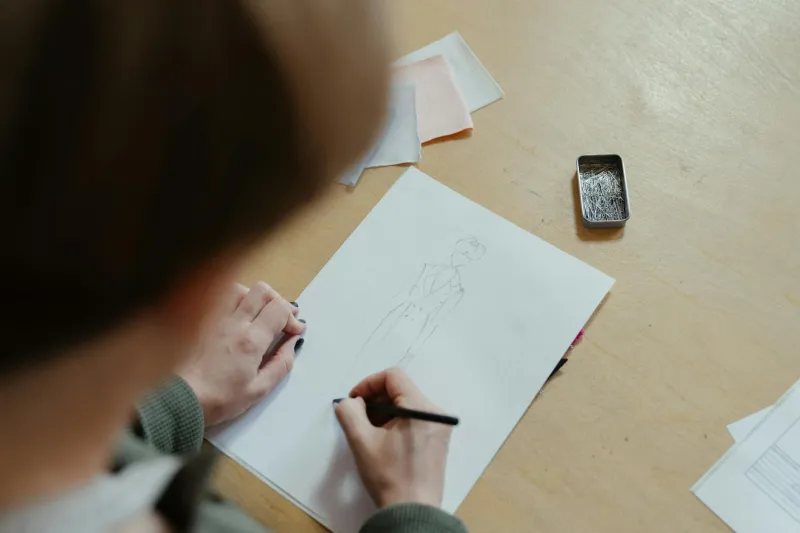
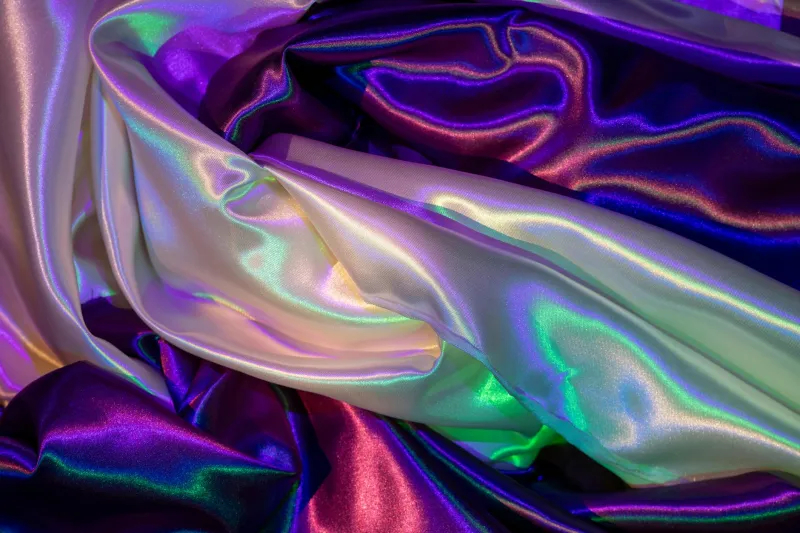
Step into the studio of Manchester-based textile artist Zara Pemberton, and you'll witness something that borders on the supernatural. Draped across her workspace are fabrics that shimmer between emerald and sapphire, garments that appear to ripple like water, and textiles that seem to breathe with their own luminous life. "People often ask if there's actual magic involved," she laughs, running her hands over a jacket that shifts from deep purple to molten gold in the afternoon light. "I suppose there is, in a way."
Pemberton is part of a growing movement of British textile designers who are pushing the boundaries of what clothing can do – creating garments that exist somewhere between fashion and optical illusion. Using techniques borrowed from trompe-l'œil art, cutting-edge holographic materials, and innovative colour-shifting dyes, these makers are crafting pieces that demand a second look, then a third, then another.
The Science Behind the Sorcery
At the heart of this movement lies a fascinating marriage of traditional craftsmanship and modern technology. Take Birmingham's Flux Textile Studio, where co-founders Maya Chen and Robert Whitfield spend their days experimenting with thermochromic pigments – dyes that change colour in response to temperature. "We're essentially creating fabric mood rings," explains Chen, showing off a scarf that transforms from midnight blue to silver as she breathes on it. "But the applications go so much deeper than novelty."
Their latest collection features dresses that shift hue throughout the day, responding to the wearer's body heat and the ambient temperature. It's fashion that literally reflects your environment, creating an ever-changing canvas that makes each wearing a unique experience.
Meanwhile, in a converted Victorian mill in Leeds, textile designer James Morrison has become Britain's unofficial master of holographic integration. His workshop resembles something between an artist's studio and a laboratory, filled with rolls of fabric that catch and scatter light in impossible ways. "Traditional fashion follows predictable patterns," he muses, holding up a blazer that seems to contain entire galaxies within its fibres. "But why should our clothes be static when light itself is constantly moving?"
The Hunger for Wonder
This fascination with optical illusion in fashion isn't happening in a vacuum. In an era of Instagram filters and digital manipulation, there's something profoundly satisfying about encountering magic in the physical world. "People crave authentic wonder," observes Dr. Sarah Blackwood, a cultural anthropologist at the University of Edinburgh who studies fashion trends. "These garments offer something genuinely surprising – they can't be replicated with an app or a filter."
The trend also taps into a broader cultural shift towards slow fashion and unique pieces. When every garment tells a different story depending on how the light hits it, the very concept of 'getting tired' of an outfit becomes obsolete.
Making the Impossible Wearable
Of course, creating clothes that seem to defy physics comes with its own set of challenges. Edinburgh-based designer Luna Blackthorne, whose colour-shifting evening wear has been spotted on red carpets from London to Los Angeles, speaks candidly about the technical hurdles. "You can't just throw holographic material at a pattern and expect it to work," she explains. "The cut has to complement the optical effect – sometimes the fabric tells you how it wants to be shaped."
Her latest pieces incorporate micro-prisms woven directly into silk, creating garments that fracture light into rainbow spectrums. The effect is subtle during the day but becomes dramatically apparent under artificial lighting – perfect for evening wear that needs to transition from dinner to dancing.
The Democratisation of Magic
What's particularly exciting about this movement is how accessible these techniques are becoming. Bristol-based collective The Optical Underground runs workshops teaching basic colour-shifting techniques using everyday materials. "You don't need a degree in chemistry to create something magical," insists founder Alex Rivera. "Some of our most stunning effects come from combining household items in unexpected ways."
Their weekend workshops regularly sell out, attracting everyone from fashion students to curious retirees eager to add a touch of wonder to their wardrobes. Participants leave with scarves that change colour, accessories that seem to glow from within, and most importantly, the knowledge that a little bit of magic is within everyone's reach.
Looking Forward Through a Prism
As this movement gains momentum, established fashion houses are beginning to take notice. Several major British brands have quietly begun collaborating with optical textile specialists, though most remain tight-lipped about upcoming collections. What's clear is that we're witnessing the early stages of a fundamental shift in how we think about clothing.
"Fashion has always been about transformation," reflects Pemberton, watching the light play across one of her latest creations. "But now we're creating clothes that transform themselves – that's something genuinely new."
In a world that often feels predictable, these textile wizards are crafting garments that remind us that magic still exists – we just need to know how to weave it into the fabric of our lives. And in the hands of Britain's most innovative makers, that magic is becoming beautifully, mysteriously wearable.