When Mushrooms Meet Mainstream
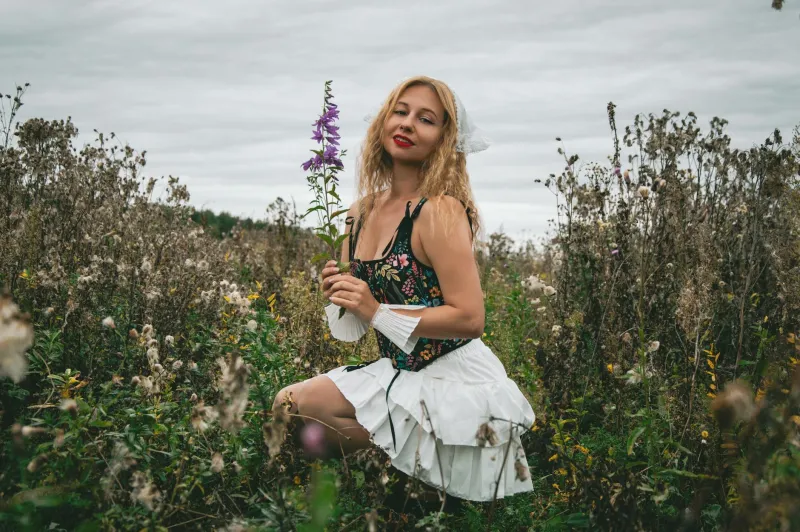
Wander through any British city centre on a Saturday afternoon and you'll spot them: young women in billowing linen dresses adorned with hand-stitched wildflowers, vintage-inspired pinafores layered over puff-sleeved blouses, and cardigans that look like they've been plucked from a Victorian cottage garden. This isn't costume play—it's cottagecore, and it's quietly revolutionising how British fashion moves.
What began as a Pinterest phenomenon during lockdown has blossomed into something far more substantial than aesthetic escapism. Walk through Edinburgh's cobbled Grassmarket or Brighton's bohemian North Laine, and you'll find independent boutiques brimming with pieces that tell stories: hand-dyed linens in shades of meadow sage, embroidered aprons that wouldn't look out of place in a Thomas Hardy novel, and flowing skirts that whisper of country lanes and morning mist.
The Slow Stitch Revolution
Behind this movement lies a generation of British designers who've turned their backs on the relentless churn of fast fashion. Take Lucy Meadowcroft, whose Leicester-based studio creates limited-edition pieces using traditional British wool and natural dyes foraged from local hedgerows. "Every garment we make carries the story of its materials," she explains, showing me a cardigan dyed with elderberries gathered from Leicestershire lanes. "When you wear something that's been touched by so many hands, that's been made with such intention, it changes how you move through the world."
This isn't merely about aesthetics—it's about reclaiming craft in an increasingly digital world. In workshops tucked away in converted barns across the Cotswolds and Yorkshire Dales, young people are learning to embroider, darn, and weave. They're discovering that creating something beautiful with their hands offers a satisfaction that no amount of online shopping can match.
More Than Nostalgia
Critics might dismiss cottagecore as romanticised nostalgia, but that misses the point entirely. This movement isn't about returning to some imagined golden age—it's about taking the best of traditional craft and making it relevant for modern life. The women embracing this aesthetic aren't retreating from contemporary culture; they're actively reshaping it.
Consider the work of Somerset-based collective Wild & Woven, whose members create contemporary pieces using centuries-old techniques. Their flowing dresses might evoke Victorian sensibilities, but they're designed for women who cycle to work, attend protests, and live thoroughly modern lives. "We're not trying to recreate the past," explains co-founder Sarah Bramblewick. "We're using traditional skills to create clothes for the future—pieces that last, that age beautifully, that become part of your story."
The High Street Awakens
Perhaps most tellingly, major British retailers are taking notice. From Oliver Bonas's embroidered smocks to & Other Stories' prairie dresses, elements of cottagecore are seeping into mainstream fashion. But there's a crucial difference between mass-produced pieces that simply mimic the aesthetic and the genuine article—garments created with care, intention, and respect for traditional craft.
The real power of this movement lies not in any single piece, but in the philosophy it represents. In an era of climate anxiety and digital overwhelm, cottagecore offers something precious: the promise of slowness, of connection to the natural world, of beauty that isn't disposable.
Crafting Tomorrow's Wardrobe
What's particularly British about this iteration of cottagecore is how it weaves together different regional traditions. You'll find Celtic knotwork embroidery on Yorkshire wool, Welsh flannel cut into Edwardian silhouettes, and Scottish tartans reimagined as flowing midi skirts. It's a celebration of Britain's rich textile heritage, but one that looks forward rather than back.
The young women embracing this aesthetic aren't trying to escape modernity—they're trying to improve it. They're choosing quality over quantity, story over status, connection over consumption. In their embroidered sleeves and hand-knitted cardigans, they're wearing their values.
A Quiet Revolution
As I watch a group of twenty-somethings in flowing skirts and vintage cardigans gathering wildflowers in London's Hampstead Heath, I'm struck by how radical this simple act has become. In a world that profits from our restlessness, our dissatisfaction, our endless hunger for the next new thing, choosing to slow down feels revolutionary.
Cottagecore might have started with teacups and toadstools on Instagram, but it's evolved into something far more significant: a gentle rebellion against a fashion industry that treats clothes as disposable, workers as expendable, and the planet as an inexhaustible resource. In choosing handmade over mass-produced, story over status, these young British women aren't just changing their wardrobes—they're quietly changing the world, one hand-stitched seam at a time.
And perhaps that's the most whimsical magic of all: the power of a simple dress to carry the seeds of transformation, worn by wonderfully curious souls who understand that true style isn't about following trends—it's about creating your own story, stitch by careful stitch.