The Regency Rebellion
On a grey Tuesday morning in Manchester, 24-year-old Lily Chen boards the 8:15 to work wearing a hand-sewn Regency-inspired spencer jacket over high-waisted trousers, her hair arranged in period-appropriate ringlets. She's not heading to a costume party or historical reenactment — she's a graphic designer at a tech startup, and this is simply how she chooses to dress.
"People always ask if I'm going somewhere special," Lily laughs, adjusting the mother-of-pearl buttons on her jacket. "But why should wearing something beautiful be reserved for special occasions? These silhouettes make me feel powerful in a way that skinny jeans never did."
Lily is part of a quietly revolutionary movement sweeping through Britain's creative communities. From Edinburgh art students sporting authentic Victorian bustles to London baristas serving flat whites in Edwardian-inspired blouses, a generation of young Britons is reaching back through fashion history — not for nostalgia, but for liberation.
TikTok Meets Tailoring
The movement has found its spiritual home on social media, where hashtags like #HistoricalFashion and #RegencyCore rack up millions of views. But this isn't superficial trend-chasing. These young dressmakers and wearers are diving deep into construction techniques, sourcing authentic patterns, and adapting historical silhouettes with serious intent.
"It started during lockdown," explains Rosie Pemberton, a 28-year-old pattern maker whose YouTube channel 'Stays and Sensibility' has become a bible for historical sewing enthusiasts. "I was stuck at home, fed up with fast fashion, and stumbled across some 18th-century stays patterns. The construction was so logical, so supportive. Modern bras felt like a cruel joke after that."
Rosie's experience echoes across the community. Young people, particularly women and non-binary individuals, are finding that historical silhouettes offer something contemporary fashion often lacks: proper fit, structural support, and clothes that accommodate rather than constrain natural body shapes.
The Politics of Petticoats
What might appear to be mere aesthetic preference runs deeper. For many young wearers, historical fashion represents a radical rejection of contemporary beauty standards and fast fashion's environmental devastation. "When I wear a 1790s gown, I'm not trying to look skinny or follow some influencer's trend," says Edinburgh University student Jamila Okafor, whose historically-inspired wardrobe spans three centuries. "I'm celebrating craftsmanship, sustainability, and silhouettes that were designed to make women look powerful, not vulnerable."
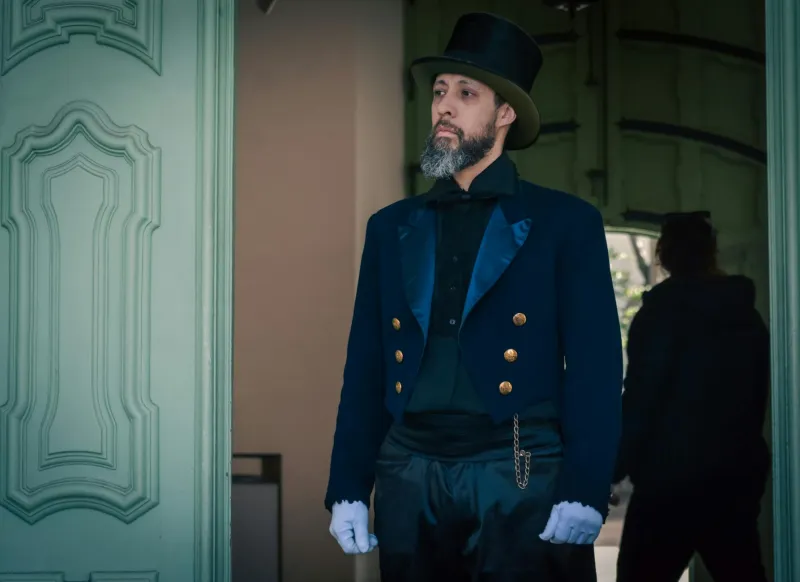
The movement particularly resonates with those seeking alternatives to gender-normative contemporary dressing. "Historical menswear offers so much more variety than modern men's fashion," notes Alex Morrison, a 26-year-old museum curator whose wardrobe includes everything from Regency tailcoats to Victorian waistcoats. "There's room for colour, texture, ornamentation. You can be masculine and beautiful simultaneously."
Making History Modern
The key to this revival's authenticity lies in its makers — a network of pattern designers, seamstresses, and small businesses creating historically-accurate pieces for contemporary wear. Companies like Prior Attire in Yorkshire and Truly Victorian in Wales have seen demand explode, particularly from customers under 30.
"We're not making costumes," insists Sarah Mitchell, founder of Prior Attire, whose historically-accurate corsets and chemises are worn daily by customers across Britain. "We're making clothes that happen to use historical construction methods. The difference is intention — these pieces are built to be lived in, not performed in."
The adaptation process requires genuine skill. Historical silhouettes must be modified for modern life — pockets added where none existed, fabrics chosen for machine-washing, proportions adjusted for contemporary lifestyles. "I can't wear a full Victorian bustle on the Tube," admits London-based seamstress Priya Sharma, whose Instagram documents her daily historical-inspired outfits. "But I can wear a beautifully constructed bodice with a modified skirt that gives me the silhouette I love without taking up three seats."
The Slow Fashion Revolution
Beyond aesthetics, the historical fashion movement aligns with growing environmental consciousness among young consumers. These garments take months to make, often by hand, using techniques designed to last decades rather than seasons. "I have three historically-inspired dresses that I've worn regularly for four years," notes textile student Bethany Clarke. "They still look perfect because they were made properly from the start. Compare that to high street clothes that fall apart after three washes."
The community aspect proves equally important. Historical sewing circles, pattern-sharing groups, and skill-swapping networks have created a supportive alternative to consumer culture. "We teach each other," explains Rosie Pemberton. "Someone masters sleeve construction and shares it with everyone. Another person figures out how to adapt stays for different body types. It's collaborative, not competitive."
Digital Dress-Up, Real-World Impact
Social media has democratised access to historical fashion knowledge while creating global communities around shared interests. TikTok tutorials break down complex construction techniques into digestible chunks, while Instagram provides daily inspiration and problem-solving forums.
"The internet has made this movement possible," reflects fashion historian Dr. Amanda Sterling, who studies contemporary adaptations of historical dress. "Previous generations of historical fashion enthusiasts were isolated hobbyists. Now they're a connected community sharing knowledge, supporting small businesses, and influencing mainstream fashion."
The influence flows both ways. Major fashion houses increasingly reference historical silhouettes, while high street brands attempt to capitalise on "cottagecore" and "dark academia" aesthetics. But the authentic community remains committed to quality over trend-chasing.
Dressing Against the Grain
Perhaps what's most radical about this movement is its rejection of fashion's accelerating pace. In an era of micro-trends and disposable style, choosing to dress like it's 1815 represents a profound act of rebellion. "I get strange looks sometimes," admits Lily Chen. "But I also get compliments from complete strangers, questions about where I shop, requests for sewing advice. People are hungry for something different, something real."
The movement's growth shows no signs of slowing. Historical sewing workshops consistently sell out, while vintage pattern companies report record sales. Young people are voting with their sewing machines, choosing labour-intensive beauty over algorithmic convenience.
The Romance of Resistance
As contemporary fashion grows increasingly homogenised — driven by global brands and social media algorithms — Britain's young historical dressers represent something precious: the courage to be different, the commitment to craftsmanship, and the radical belief that clothes should be beautiful, well-made, and personally meaningful.
"We're not trying to live in the past," clarifies Alex Morrison, adjusting a hand-embroidered waistcoat that would have been perfectly at home in 1850. "We're taking the best of historical construction and adapting it for our own lives. It's not about nostalgia — it's about creating a more beautiful future."
In choosing corsets over crop tops, stays over shapewear, and hand-sewn over mass-produced, these young romantics aren't retreating from modernity — they're redefining it, one historically-inspired stitch at a time.