Clay Whispers: The Quiet Revolution Happening in Britain's Hidden Pottery Studios
There's something magical happening in the dimly lit corners of Britain's creative landscape. While the world scrolls endlessly through feeds and filters, a quiet army of ceramicists is working with their hands, turning humble clay into objects that feel like they've tumbled straight from a fairy tale. These aren't mass-produced mugs destined for charity shop shelves — they're tiny portals to other worlds, each one carrying the fingerprints and dreams of its maker.
The Alchemy of Earth and Fire
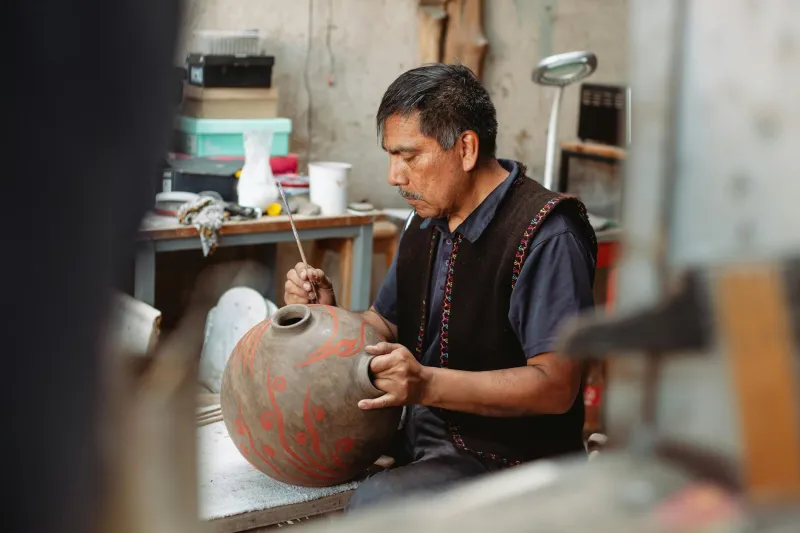
Step into Morag Campbell's studio in the Scottish Borders, and you'll find teapots adorned with dancing hares and soup bowls painted with midnight forests. "Every piece tells a story," she explains, her hands still dusty from the wheel. "In our hyperconnected world, people are craving something real, something that speaks to their soul rather than their smartphone."
This sentiment echoes across the country, from the windswept studios of Orkney to the sun-dappled workshops of Devon. Britain's independent ceramicists are crafting more than just functional pottery — they're creating talismans for modern living, objects that invite us to slow down and savour the ritual of tea, the ceremony of a shared meal.
Where Folklore Meets Function
In a converted barn outside Bath, Emma Bridgewater might have popularised the polka dot, but today's ceramic rebels are painting different dreams. Take Rosie Fletcher, whose mugs feature surreal landscapes where mushrooms grow into houses and rivers flow uphill. "I want someone's morning coffee to feel like stepping into a storybook," she laughs, glazing a plate scattered with tiny doors and windows.
This folkloric approach isn't just aesthetic — it's deeply political. In an age where algorithms decide what we see and buy, these handmade objects represent a return to the personal, the imperfect, the gloriously human. Each wobble in the clay, each brushstroke that doesn't quite align, becomes a small act of resistance against digital perfection.
The New Collectibles
What's particularly fascinating is how these ceramicists are redefining what it means to collect. Gone are the days when only antique china held value. Today's pottery enthusiasts are queuing (virtually and literally) for pieces by makers like Tom Kemp in Cornwall, whose teacups feature miniature painted scenes of British wildlife, or Sarah Henderson in Glasgow, who transforms ordinary dinner plates into canvases for abstract botanical studies.
"It's not about matching sets anymore," explains vintage dealer and ceramic enthusiast James Morrison. "People want pieces that spark joy, that tell their story. A mismatched table setting with handmade ceramics says something about the owner — it says they value creativity over conformity."
The Therapeutic Revolution
There's something deeply therapeutic about the ceramic process, both for makers and users. In a world of instant everything, the slow pace of pottery — the waiting for pieces to dry, the anticipation of the kiln opening — offers a different rhythm entirely. Many of Britain's ceramic artists speak of their practice as meditation, a way of processing the chaos of modern life through the ancient alchemy of earth, water, and fire.
This mindful approach extends to the end user too. Drinking from a handmade mug, eating from a plate where you can see the maker's thumbprint in the clay rim — these small acts become moments of connection, tiny islands of calm in our frantic days.
Beyond the Tea Ceremony
While teacups might be the gateway drug, Britain's ceramic artists are pushing boundaries far beyond traditional tableware. In Manchester, collective 'Clay Dreams' creates vessels that double as planters, their surfaces crawling with hand-painted vines and impossible flowers. In Brighton, potter Zoe Williams crafts serving dishes that look like they've been borrowed from a woodland fairy's kitchen, complete with mushroom handles and moss-green glazes.
These pieces blur the line between art and utility, challenging our assumptions about what belongs in a gallery versus what belongs on our dinner table. "Why can't functional objects be transcendent?" asks Williams, arranging a collection of her latest bowls. "Why can't washing up be a moment of wonder?"
The Digital Paradox
Ironically, many of these anti-digital rebels have found their audience through social media. Instagram has become an unlikely champion of the handmade, with pottery studios gaining thousands of followers eager to glimpse behind-the-scenes moments of creation. But rather than diminishing the magic, this digital window seems to enhance it — viewers become invested in the process, the maker's story, the journey from lump of clay to finished piece.
A Future Written in Clay
As we navigate an increasingly uncertain world, perhaps there's something profoundly hopeful about these ceramic storytellers. They remind us that beauty can be functional, that art doesn't need to be precious, and that the most radical act might be sitting down with a handmade cup and actually tasting your tea.
In studios across Britain, wheels are spinning, kilns are firing, and stories are being written in clay. Each teacup is a small rebellion, each painted motif a whispered promise that wonder still exists, waiting to be discovered in the most everyday moments. The revolution isn't happening in the streets — it's happening in our kitchens, one magical mug at a time.