When Darkness Falls, Magic Rises
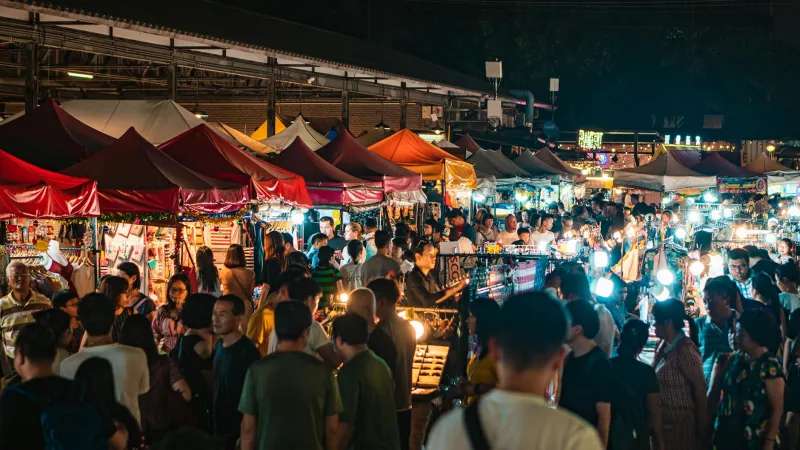
Something extraordinary happens when the sun sets over Britain's creative landscape. As digital screens flicker in living rooms across the country and high street shutters roll down, a different kind of commerce awakens. In converted churches, forgotten warehouses, and community halls that smell of beeswax and possibility, the night markets are stirring.
These aren't your typical Saturday morning affairs with soggy bacon rolls and second-hand books. Britain's after-dark craft fairs are becoming cathedrals of creativity, where fairy lights replace fluorescent strips and makers peddle their wares under the gentle glow of hurricane lamps. It's shopping as theatre, browsing as ritual — and it's quietly revolutionising how we think about buying beautiful things.
The Witching Hour Economy
Take Edinburgh's monthly Midnight Makers market, held in the atmospheric vaults beneath the Royal Mile. What started as an experiment by textile artist Morag MacLeod has become a pilgrimage site for those seeking something beyond the algorithm's reach. "There's something about shopping by candlelight that slows you down," MacLeod explains, her stall draped in hand-dyed silks that seem to shimmer with their own inner light. "People touch things differently. They ask questions. They tell stories."
The phenomenon isn't confined to Scotland's dramatic backdrops. In Bristol's Tobacco Factory, the quarterly After Hours market transforms the industrial space into something that feels part bazaar, part séance. Ceramicist James Hartwell, who's been trading at night markets for three years, swears by the alchemy of evening trading. "My work looks completely different under warm light," he says, arranging his moonstone-glazed bowls on reclaimed oak. "But more than that, people are different after dark. They're more open, more curious. They're not rushing between appointments or checking their phones every thirty seconds."
The Antidote to Digital Fatigue
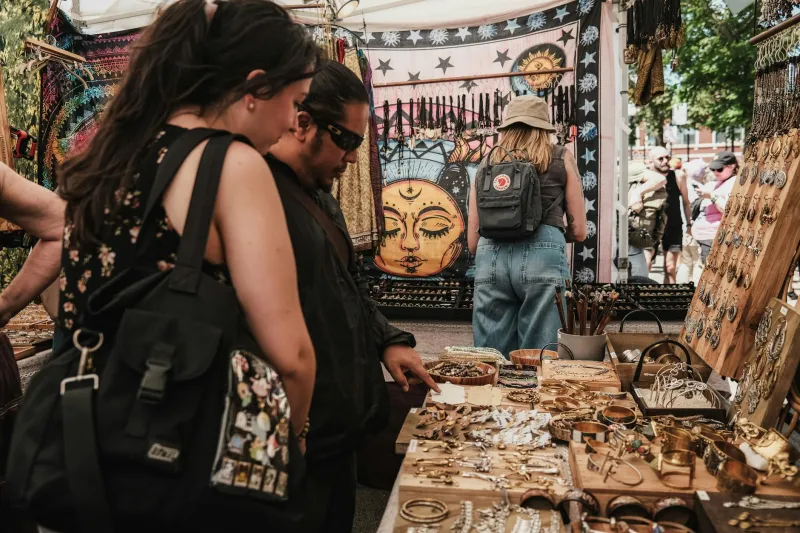
In an age where we can buy anything with a tap, these nocturnal gatherings offer something increasingly rare: genuine discovery. There's no search bar here, no customer reviews or algorithmic suggestions. Instead, there's the delicious uncertainty of turning a corner and finding something you didn't know you needed — a hand-forged silver cuff that catches the light just so, or a silk scarf printed with patterns inspired by moth wings.
The makers themselves are drawn to the intimacy these evening events create. "Daytime markets can feel like performing," admits jeweller Saskia Chen, whose delicate pieces seem made for candlelight. "Everyone's bright and chatty and rushing. Night markets feel more honest somehow. People come because they want to be there, not because they're killing time between errands."
A Different Kind of Curation
What sets these twilight bazaars apart isn't just their timing — it's their curation. The organisers, often makers themselves, understand that atmosphere is everything. At Manchester's monthly Lamplight & Lace market, held in a Victorian railway arch, vintage Persian rugs soften the industrial edges while local musicians provide a soundtrack of folk and ambient electronica.
The effect is transformative. Suddenly, shopping becomes an experience that engages all the senses. The scent of beeswax candles mingles with the earthy smell of hand-thrown pottery. Conversations happen in hushed tones, as if we're all co-conspirators in something deliciously subversive. And perhaps we are — rebelling against the tyranny of convenience, the cold efficiency of online retail, the relentless brightness of consumer culture.
The Makers' Midnight Oil
For many artisans, these evening markets have become more than just another sales channel — they're creative lifelines. Textile artist Rosa Pemberton, whose botanical prints seem to glow in low light, found her voice at Leeds' monthly Moonlight Market. "I was struggling at daytime fairs," she admits. "My work felt lost among all the bright colours and bold patterns. But at night markets, the subtlety becomes a strength. People lean in closer, they spend time really looking."
The community aspect is equally important. Night markets tend to be smaller, more selective affairs, fostering genuine relationships between makers and regular customers. "I have people who come to every market just to see what I've made that month," says leather worker Tom Ashworth, whose hand-stitched bags are displayed on a table draped with midnight-blue velvet. "It's like having a monthly exhibition, but one where people can actually take the art home."
Beyond the Transaction
Perhaps what's most remarkable about Britain's night market movement is how it's redefining the relationship between maker and buyer. These aren't anonymous transactions but genuine exchanges — of stories, inspiration, and craftsmanship. In the gentle glow of Edison bulbs and tea lights, shopping becomes something approaching sacred.
As the movement grows, with new night markets launching from Glasgow to Brighton, it's clear that something deeper is happening here. These twilight gatherings aren't just about buying beautiful things — they're about reclaiming the act of discovery, celebrating the handmade in an increasingly digital world, and proving that sometimes the most magical shopping happens when the rest of the world has gone to sleep.
In a culture obsessed with speed and convenience, Britain's night markets offer something revolutionary: the luxury of time, the pleasure of serendipity, and the radical act of shopping with all your senses engaged. As Morag MacLeod puts it, "We're not just selling things — we're selling a different way of being in the world."